
 Call for Fundamental Questions in the Field of Oral History
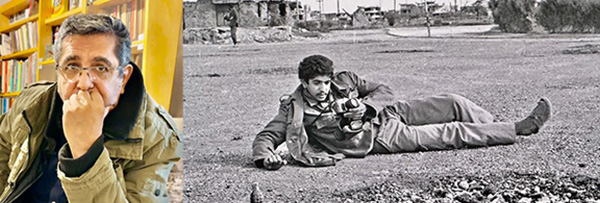 Jasem Ghazbanpour narration of the first day of the war in Khorramshahr
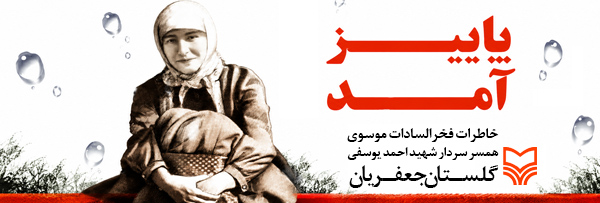 A Review of the Book the Autumn Arrived
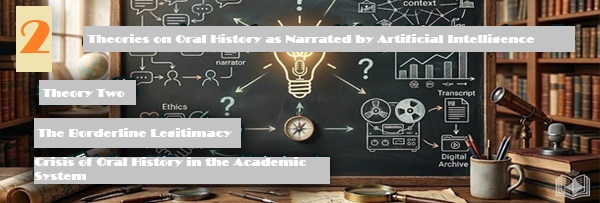 Theory Two: The Borderline Legitimacy Crisis of Oral History in the Academic System
 Theory One: “The Structural Duality of Opportunity–Threat in the Government’s Entry into Oral History”
 Happy Islamic Republic of Iran Day!
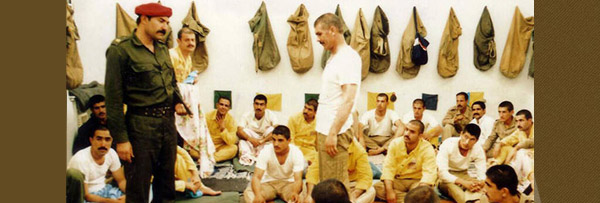 Fasting in Tikrit Prison No. 16; Test of Faith in the Heart of Hardship
The Third Regiment: Memoirs of an Iraqi Prisoner of War-53
All Iraqi forces established a new defensive line behind the Karkheh Kur River. Around this defensive line, on the flat ground between the Maysan River and the Karkheh Kur, mines, time bombs, and napalm barrels were planted to prevent the Iranians from launching an attack in the area. In late January, after withdrawing from the Bostan area, the 20th Brigade became the shock reserve of the 5th Division.Fundamental Questions in the Field of Oral History - 1
10 Fundamental Questions in Oral History
This text was received at the request of the Iranian Oral History website and in response to the "Call for Fundamental Questions in the Field of Oral History". In it, the author raised 10 key questions that he believes every researcher, interviewer, and person interested in oral history should think about, and wrote an answer for each question in about 200 words.Memoirs of Saleh Mousavi
Seyyed Saleh Mousavi, who was called “Sali” by his comrades and a teenage fighter during the Holy Defense era, was a guest on the 299th Shab-e Khatereh (Night of Remembrance) program (May 2018). Seyyed Saleh reminisced about Operation Tariq al-Quds. He said: “In 1981, during Operation Tariq al-Quds, we had to go northwest of Susangerd. Our mission location was in a village called Megasis.374th Night of Remembrance - 3
The 374th Night of Remembrance program was held on Thursday - November 27, 2025, focusing on reciting the memories of active military personnel during the victory of the Islamic Revolution from the prisons of the Pahlavi regime in the Soura Hall of the Hozeh Honari. The program began with the broadcast of a clip of Martyr Amir Ali Hajizadeh, and then Bahram Ali Taheri, Mohammad Hassan Pourjoum’eh, and Qanbar Rasekh shared their memories. Davud Salehi led the performance of this ...Experts Answer to Oral History Questions
100 Questions/ 52
How should the interviewer deal with the interviewees body language, including silence?
We asked several researchers and activists in the field of oral history to express their views on oral history questions. The names of each participant are listed at the beginning of their answers, and the text of all answers will be published on this portal by the end of the week.The Third Regiment: Memoirs of an Iraqi Prisoner of War - 52
I returned and informed the others of the new orders. Before sunset, our convoy set off. I was the last one to move with an ambulance. Darkness was everywhere. Unfortunately, no matter how hard I started the engine, the ambulance did not light up. It was a sensitive and difficult situation. Where could we go that night? The army was gradually retreating and the Iranians were chasing them.A report on the weekly questions of the Oral History website
A year of non-stop questioning
A year has passed since the weekly questions and answers of the Oral History website. From 11 October 2025 to 11 October 2026, every week a question about an issue in oral history was raised by some experienced and knowledgeable figures who answered them from their own perspective. A year of continuous questioning, scientific research and efforts to open new horizons in the path of oral history should ...Memories of Mrs. Jumay Ahmed Karoufi
Jumay Ahmed Karoufi, the wife of the martyr Sheikh Ibrahim Yaqoob Zakzaky, was a guest on the 290th Shab Khatira (Night of Memories) program (May 2018). Mrs. Jumay is a Shiite fighter in Nigeria whose three children are missing and whose two adopted children, who were actually her sister’s children, were martyred. She has a master’s degree in communications and library science and is the author of several books, a director and a teacher.Encountering Oral History from a Theatrical Perspective
According to the Iranian Oral History website, the sixth session of “Now; Oral History and Today Sessions” entitled “Encountering Oral History and Theater” was held with a speech by Amir Safaipour, a writer and researcher of dramatic literature, in the Firoozeh Hall of the Isfahan’s Arts Center. In the first part of the session, Safaipour reviewed the basics of theater and said: Today’s session is about oral history.Experts Answer to Oral History Questions
100 Questions/51
How long after the event, should the narrators memories be recorded?
We asked several researchers and activists in the field of oral history to express their views on oral history questions. The names of each participant are listed at the beginning of their answers, and the text of all answers will be published on this portal by the end of the week.Most visited
Call for Fundamental Questions in the Field of Oral History
The Oral History of Iran website invites all researchers, experts, professors, and activists in the field of oral history to share their views and experiences with the audience on the most important questions in this field. We ask you to raise a maximum of 10 fundamental questions in the field of oral history that every researcher, interviewer, and oral history enthusiast should think about, and write an answer for each in about 200 words.100 Questions / 43
How can narrators and interviewers reach a common understanding?We asked several researchers and activists in the field of oral history to express their views on oral history questions. The names of each participant are listed at the beginning of their answers, and the text of all answers will be published on this portal by the end of the week.
Documentary Pathology of the US Embassy Documents
The Necessity of Scientific Rereading and Content Analysis of DocumentsMore than four decades have passed since the publication of the first collections of documents from the US Embassy in Tehran. However, despite the relatively easy access to this treasure trove of documents, systematic research exploitation of it has not been adequate. We still do not have a “comprehensive picture” of the content of these 11,000 documents.
100 Questions / 42
What is the importance of the narrator and interviewers shared understanding of the past in oral history?We asked several researchers and activists in the field of oral history to express their views on oral history questions. The names of each participant are listed at the beginning of their answers, and the text of all the answers will be published on this portal by the end of the week.

