
Three hundred and fourteenth night of memory
Some Memories of Martyr Mostafa Chamran
Elnaz Darwish
Translated by: Fazel Shirzad
2020-7-7
Note: Three hundred and fourteenth night of memory was held in June 2020, attending by three comrades of Mostafa Chamran.
According to Oral History website, three hundred and fourteenth night of memory, was held at Art Center's Andisheh Hall, maintaining social distance on 25th June 2020. In this program, Seyyed Abolfazl Kazemi, Haj Hassan Shah Hosseini and Mr. Ismail Shah Hosseini recounted memories of sacred defense era and the irregular battles of Martyr Mostafa Chamran and the role of motorcyclists.
In this program, Mehdi Salehi was present as the administrator and shared with the guests the questions related to Dr. Chamran and the documentary "The Memories of Motorcycle" about one of Dr. Chamran's friends named "Jalil Naghad". The first guest was Seyyed Abolfazl Kazemi, the narrator of a book entitled "The Alley of Painters", and a fighter and veteran of sacred defense.
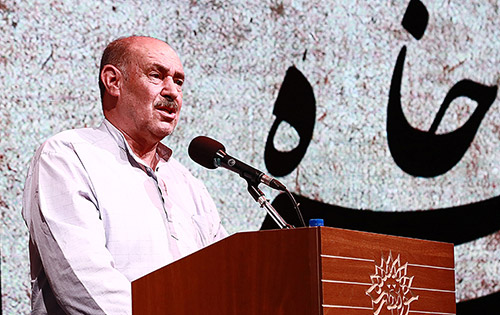
He began his speech with a poem, and according to him, Chamran enjoyed of listening to it:
Not to be burnt initially the lover
The candle caught fire, remained forever.
He continued: "In the past week, Chamran came into people's minds and tongues, [because of the anniversary of the doctor Chamran's martyrdom]; I always joked to the doctor that you are not from Tehran, you laughed and said that he was from Oudlajan! Last year, when I went to the ceremony of Martyr Akbar Chehrghani, who was the comrades and courier of Dr. Chamran, and he was martyred in Susangard at noon in Tasu'a[1]. there was a person that said me: I am the son of Chamran. I laughed and said:" So, the doctor also had a third wife!" he replied: "No, I am a child from the village named Chamraneh." After the ceremony, we went to the village with him and visited the uncle's house of Dr. Chamran, that uncle's wife of the Chamran, who is a kind old woman, is still living there.
Kazemi continued his speech: "Now that we have happiness today and we are here in these days, I am going to share some memories about Dr. Chamran, which have been told less." He added: "All of us, including Mr. Shah Hosseini, Dr. Chamran, Martyr Ahmad Motavasalian, etc. are from Rey Street. When my book [Alley of Painters] was ready to be published, I told Mr. Morteza [Sarhangi] to delete the word "I" wherever it has been written.
He also removed all the words" I". After being published by Dr. Hossein Falahati, the uncle of Martyr Nasser Farajollahi, who was very helpful for Dr. Chamran, my book was handed over to Rahim, the doctor's second son, who is a firefighter in New Jersey, USA; in a phone call with him, I found out that one of his demands was to travel to Iran. Interestingly, thirty-eight years after Dr. Chamran's martyrdom, no individual or institution has invited Dr. Chamran's children to come Iran. It is the right of these children to be invited to their homeland where their father was martyred to defend it. A few days after the doctor's family left Iran, Mrs. Parvaneh [Dr. Chamran's wife] called and informed him that Karim, the doctor's oldest son, had sunk in the pool; The doctor cried whenever he remembered this event. The doctor's daughter and two other sons are living in the United States, but they missed Iran.
Seyyed Abolfazl Kazemi went on to say: "One of the things that the doctor always said was that one day will come that all of us have to be careful. We asked him jokily, which day, doctor? He replied: "The day when business and love will be replaced.". At that time, we were young and did not understand the meaning of this doctor's speech; but these days, the meaning of his words is more obvious to us. I tell me that, because we went to the war for a few days, we are always looking for our own degree and benefit. He continued: "The doctor always told us that business and love are against each other. In this film, made by Mr. Amir Hossein Norouzi [Memoirs of a Motorcycle], which became the best movie in Haghighat Cinema, we see that Jalil Naghad is a true lover and proved that in the days when everyone wore the mask of religion and say repeatedly that we should not leave alone the Guardianship of the Islamic Jurist( supreme leader). they should remember the doctor's words that he always told us to be careful, if you eat a forbidden food, forbidden words will come out of your throat. As you can see in the movie, Jalil proved that he is a lover but not a businessman.
Kazemi contniued his speech: " Jalil was martyred; Two days after the martyrdom, we are called and said that they found out he was alive by the steam that had come out of his mouth; therefore, he was transferred to Ahvaz. In short, he was in a coma for six months and then regained consciousness. Half of his body can't move, anf he unable to speak, and only works with one hand. He is not a magician, but he changes a tire with one hand and changes the engine oil, and he has not told anyone that he was in war and was one of the first war veterans, so they must give him his right.
Kazemi continued: Jalil's family was one of the richest people in our neighborhood. Because they had public bath, they were known as Bath-man; But Jalil was so zealous that he puts his hand on his knee and stands up to work with the physical conditions he had. Mr. Massoud [the son of Ayatollah Khamenei] used to say: Jalil himself is a book. Look! We should not only show the bad things to people, but the people should see how a person with all his disabilities, and better situation that he could have, is living only for the love of God and does not expect anything from anyone.
The administrator then asked question: "When was this film made? And, was the motorcycle race hold in the same year? Tell us a little about Mr. Jalil Naghad!"
Kazemi replied: "This film was made last year and the race was held at the same time. Jalil and I are from the same alley. When Mr. Norouzi made this film with his courage he had and it has been broadcast several times in these few days, you may not believe that many residents of Khorasan Street did not know at all that Jalil is a veteran. According Mr. Rajaee, "a poor man is not one who doesn’t have anything, but one who does not have the language to say that he doesn't have anything." It was only after the film that many people realized that Jalil Naghad was a friend of Dr. Chamran and Supreme Leader and became familiar with him.
Salehi asked: "It seems that Mr. Jalil wanted to talk and Mr. Nowruzi went to his shop several times under the pretext of changing the engine oil so that they could talk to Mr. Jalil?"
Seyyed Abolfazl Kazemi replied as follows: " Haj Agha Shah Hosseini and I spoke with Jalil, and then he ultimately accepted to do this work. When Jalil came out of a coma and treated with the help of physiotherapy, his father buy a shop for him and started working there because he loved motorcycles. Another person that I am sure he is not satisfied, but I will mention his name here, is Mr. Seyed Mahmoud Khosravi Vafa. When supreme leader came to the warfront, he was one of the three people who were with him. The other two were martyred. Seyyed Mahmoud returned from war after his legs were amputated during an operation, and first he was the head of leader's protection team, and then he became the president of Veterans Federation. In this film, the motorcyclists' race was held by friends and comrades who went to see him, and the cup was named to Jalil Naghad to be awarded to the first person, but after the race, Jalil was awarded instead of the first person. Jalil was very happy. Jalil was not only one of Chamran's allies, but he was with Ayatollah Khamenei when he was irregularly on the front lines. But none of activities didn’t cause him to be out for his own profit.
The administrator continued his questions: "Martyr Chamran asked you to invite a motorcyclist group to be present on the warfront?
Kazemi replied: This was done in two times. In the first time, a group of twenty-one members of the Lebanese's Amal Organization--with Ali Abbas, who was like Rustam[2]-- came into Iran to destroy the tanks. The tanks came to Iran; But because Lebanon was a mountainous area and Iran was flat one, it was not possible to do this plan. In the second time, the doctor Chamran asked me to take the motorcyclists. I came to Tehran and chose a group of twenty people from Qazvin Square, our neighborhood. Interestingly, when we went to the Prime Minister's Office with this group, a man who was there said: "What did you bring these people for?!" here, we called the doctor and he became upset for the man's behavior. God knows that the doctor embraced these people of group one by one; Many of these comrades prayed with shoes, but the doctor organized them with his special behavior.
He added: "The group of irregular wars was different from all the groups that were present in the war.There were 25 schools in Ahvaz that comrades used them; the comrades who were in square of Khorasanis, Nazi-Abadis, Nizam-Abadi, etc. had individual schools that were Aqaba[3] and there was a frontline; They had to coordinate the affairs of theirs forces with Tehran; In this way, when they called the comrades of their neighborhoods to gather forces in the mosques; these people would arrive the area and the schools after forty days. these were the people's forces. Dr. Chamran's distinctive personality was that he was always in front and told other people to come forward; the doctor wanted to sacrifice himself for comrades; he used to go head and identify areas in all operation.
Kazemi went on to say: "the twenty-one group that came from Lebanon all become martyred, and buried around Martyr Chamran, but no one and no organization knows them." This group of men were humble and fought only for the sake of God and duty, and then they bocome martyred; Mustafa Chamran raised such people who were unknown and indebted to God.
He added: "Mr. Ali Rouintan, the director of film "Heart-stricken", was going to make a film about Mr. Ebrahim Hadi. In the first meeting that was held to make film, I told Ebrahim Hadi that if the martyr is right and alive, show us so that Mr. Amir Monjar respond our call. God is witnessing that I said this when my phone rang and Amir Agha was behind the line and said that you had called twice, we talked and explained the case. I wish a group would make a film about twenty-one people and Ali Abbas so that they would not remain anonymous. God knows that as soon as I said these words, my phone rang, and Amir was on phone and said that you had called twice, we talked and explained the problem. I wish a group would make a film about the twenty-one people and Ali Abbas so that they would not remain anonymous. Finally, let's make happy the souls of all the martyrs from Karbala of Imam Khomeini to Karbala of Imam Hussein, the defenders of shrine and the martyrs of the irregular wars and the martyr Chamran by saying "peace be upon Mohammad and his holy family"
At the end of the meeting "The Night of Memory" group, in honor of Seyyed Abolfazl Kazemi's speech, volunteered to make a documentary about Ali Abbas.
To be continued…
[1] Tasu'a is the ninth day of Muharram and the day before Ashura. Several events occurred on this day, including: Shemr's entrance to Karbala, the granting of safe conduct for the children of Umm ul-Banin, preparation for war; and Husayn ibn Ali and his companions were besieged by the enemy.
[2] He is a legendary hero in Persian mythology, the son of Zāl and Rudaba, whose life and work is described in the epic poem Shahnameh. In Shahnameh, Rostam and his predecessors are Marzbans of Sistan.
[3] backline
Number of Visits: 7900
Share


The latest
- Report of the Third Meeting of the Specialized Roundtable on Oral History of the Country
- 100 Questions/50
- The Third Regiment: Memoirs of an Iraqi Prisoner of War - 50
- Narrative and the "War of Narratives" in the Era of Resistance and Imposed Wars
- Memories of Mohammad Boloori
- Call for Fundamental Questions in the Field of Oral History
- 100 Questions/49
- The Third Regiment: Memoirs of an Iraqi Prisoner of War - 49
Most visited
- The Third Regiment: Memoirs of an Iraqi Prisoner of War - 49
- 100 Questions/49
- Narrative and the "War of Narratives" in the Era of Resistance and Imposed Wars
- Memories of Mohammad Boloori
- Call for Fundamental Questions in the Field of Oral History
- The Third Regiment: Memoirs of an Iraqi Prisoner of War - 50
- Report of the Third Meeting of the Specialized Roundtable on Oral History of the Country
- 100 Questions/50
100 Questions / 43
How can narrators and interviewers reach a common understanding?We asked several researchers and activists in the field of oral history to express their views on oral history questions. The names of each participant are listed at the beginning of their answers, and the text of all answers will be published on this portal by the end of the week.
Documentary Pathology of the US Embassy Documents
The Necessity of Scientific Rereading and Content Analysis of DocumentsMore than four decades have passed since the publication of the first collections of documents from the US Embassy in Tehran. However, despite the relatively easy access to this treasure trove of documents, systematic research exploitation of it has not been adequate. We still do not have a “comprehensive picture” of the content of these 11,000 documents.
100 Questions / 42
What is the importance of the narrator and interviewers shared understanding of the past in oral history?We asked several researchers and activists in the field of oral history to express their views on oral history questions. The names of each participant are listed at the beginning of their answers, and the text of all the answers will be published on this portal by the end of the week.
Validation: Challenges and Necessities
Where does truth stand in oral history? How can the correctness of a narrative be recognized? Does fact-checking matter? If there is exaggeration in the reporting of some accounts, how can it be detected? Is it possible to record an event accurately through the recording of a narrative? Readers and users of oral history works are often faced with these questions, and sometimes encounter doubts about some oral history works.
