
Air Raid to Al-Waleed (13)
The Story of Demolishing Fighters and the Equipment in Al-Waleed Triple Military Bases Known as H-3
2016-4-2
Air Raid to Al-Waleed (H-3)
The Story of Demolishing Fighters and the Equipment in Al-Waleed Triple Military Bases Known as H-3
By: Brigadier General Ahmad Mehrnia
Tehran, Sooreh Mehr Publications Company
2010 (Persian Version)
Translated by: Zahra Hosseinian
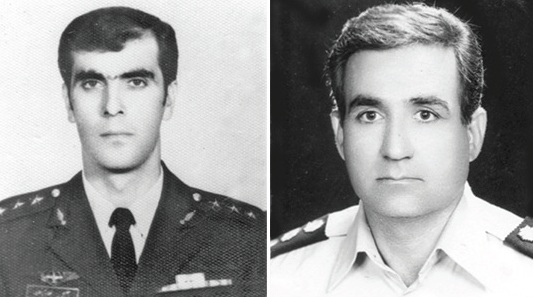
Liberated prisoner, Second Brigadier General Jafar Varasteh, who returned home after standing out more than three years captivity (Colonel), and Jalil Khademol-Ulama (Captain)
After expressing his delight about referring to him long after retirement, retired pilot Col. Khademol-ulama said about the mentioned operation in a telephone interview from Urmia:
"I first was the pilot of F-5 fighter and then was elected for piloting the Chinook helicopter. Because of years of flying experience and working in key organizational positions, I was asked to attend in the Sardrood radar site to monitor the proper implementation of the operation and report to superior authorities any possible inconsistencies or unexpected event. In addition, I should be careful about maintaining the confidentiality of operation. After mission announcement, I immediately went to my house and took my personal belongings and traveled to Tabriz by Falcon jet.[1] Shahid Ardestani and two or three other people were accompanied me on the flight. We arrived to base around midnight and first I went to visit my old friend, Jafar, and after having some chat with him, we went to Tabriz radar site."
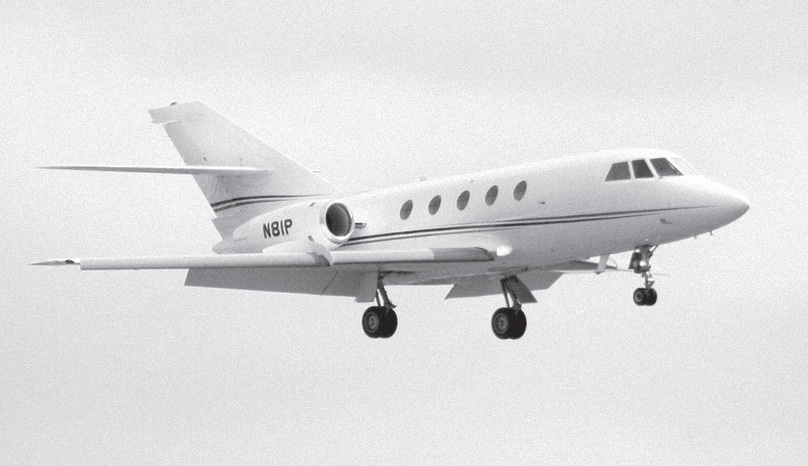
Jet Falcon-20
Retired fighter control, Col. Einollah Afrooz, who was first Lt. and operation officer of Tabriz radar at the time of carrying out the mission, says:
"One day, around two o'clock in the afternoon, I was phoned in the radar site from command post of Tabriz air base and was asked to wear uniforms neatly and quickly headed to the Tabriz base to carry out an important mission. I coordinated with the operation chief of radar and I was headed. As soon as I reached to the site, operation deputy communicated to me that a Falcon jet was landing and I should go to Tehran along with first Lt. Pilot Mustafa Ardestani, according to the Force Staff authorities 'order. No one knew what was going on and I had been a little worried. A Falcon jet aircraft arrived and while its engines was still on, we boarded and headed to Tehran. During the flight, I would think all the time what was going on. Ardestani was also sunk in thinking. A couple of times I tried to pump information out of him, but apparently he wouldn't know anything and finally we arrived to Tehran. At Air Force Staff, we were immediately guided to the 'special office'.[2] In the war room of command post, some old pilots were discussing.
Col. Hoshyar justified me by using the map that was unfolded on the ground. According to him, ten Phantoms would come from Hamadan to South Lake Urmia in low altitude close to sunrise, where two tankers were waiting them to deliver fuel. He also stressed that if a problem occurred to one of tankers, you should order that the tanker which is flying in the West for other fighters, come to the region. Note that you must refrain from radio talk as far as possible, except in an emergency! He went on to explain the rest of the rout and how to use interceptor F-5 aircraft and carefully explained the harassment and infiltrator bombing operation. While Ardestani was justified of his special mission in a separate meeting, I was asked to utilize all my power and accuracy and take care of any enemy activity in the area, using the best available employees in the radar station. Also, the position of F-5 covering fighters was communicated and once again emphasized that all the operation must be performed in absolute radio silence.
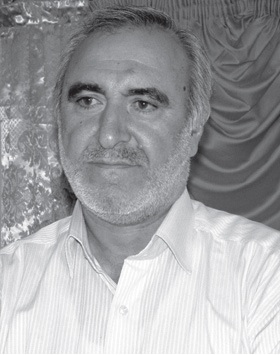
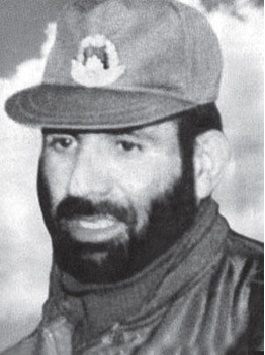
Colonel command and control, Einollah Afrooz and Brigadier General Mustafa Ardestani
After the end of justification, I was wanted to drop into Hamadan air base where I should justify the operation officer of "Subashi"[3] radar station. We returned at midnight with the same plane. The weather was very bad and it thundered severely, the plane would shake so badly that I felt both pilots have suffered from anxiety and panic. At this time, my eyes fell to Mustafa Ardestani who had sat calm and firm and entirely muttered the name of God as a prayer, as if nothing is wrong. To the same reason, that night I was emotionally attached to this revered officer and learned a great lesson from him. Due to poor weather conditions, flying to the Nojeh base was canceled and we returned directly to Tabriz. I kissed Mustafa and said goodbye to him and headed to the radar site. In the way, I would pray no problem occur and reach the place on time.
Through coordination, a group of my trained colleagues was at the foot of radar scope at dawn. I emphasized strongly on the carefulness in looking after the environment; everyone would guess something. A number of them would ask about mission, especially guys of radar Intelligence Protection insisted to figure out what's going on, because at the time different events would happen and they didn't want to be surprised. So, they were with us during the mission. The fact was that I myself didn't know the details of operation across the border and would say the matter will be cleared if you wait! In the meantime, I was extremely frightened. The time was very slow. Sometimes it felt like the hands of clock have stopped. Thankfully all programs went on as it had been justified."
***
To be continued…
[1] - Falcon jet is a small commercial/passenger service aircraft with two turbofan jet engines, which is capable of moving eight to ten passengers with high speed. Air Force has a few of this type of aircraft to carry out specific tasks.
[2] - 'Special office' is a building for maintaining high classified plans and documents, so that at the hour of need to access these plans, should refer to the location of the office
[3] - 'Subashi' in Hamadan and 'Sardrood in Tabriz are two places where the radar stations have been established.Number of Visits: 6787
Share


The latest
- A year of non-stop questioning
- Memories of Mrs. Jumay Ahmed Karoufi
- Encountering Oral History from a Theatrical Perspective
- 100 Questions/51
- The Third Regiment: Memoirs of an Iraqi Prisoner of War-51
- Family History; A Legacy for Future Generations
- Oral History News for August 23rd – September 22nd 2026
- Report of the Third Meeting of the Specialized Roundtable on Oral History of the Country
Most visited
- The Third Regiment: Memoirs of an Iraqi Prisoner of War - 50
- Report of the Third Meeting of the Specialized Roundtable on Oral History of the Country
- Oral History News for August 23rd – September 22nd 2026
- 100 Questions/50
- Family History; A Legacy for Future Generations
- The Third Regiment: Memoirs of an Iraqi Prisoner of War-51
- Encountering Oral History from a Theatrical Perspective
- 100 Questions/51
100 Questions / 43
How can narrators and interviewers reach a common understanding?We asked several researchers and activists in the field of oral history to express their views on oral history questions. The names of each participant are listed at the beginning of their answers, and the text of all answers will be published on this portal by the end of the week.
Documentary Pathology of the US Embassy Documents
The Necessity of Scientific Rereading and Content Analysis of DocumentsMore than four decades have passed since the publication of the first collections of documents from the US Embassy in Tehran. However, despite the relatively easy access to this treasure trove of documents, systematic research exploitation of it has not been adequate. We still do not have a “comprehensive picture” of the content of these 11,000 documents.
100 Questions / 42
What is the importance of the narrator and interviewers shared understanding of the past in oral history?We asked several researchers and activists in the field of oral history to express their views on oral history questions. The names of each participant are listed at the beginning of their answers, and the text of all the answers will be published on this portal by the end of the week.
Validation: Challenges and Necessities
Where does truth stand in oral history? How can the correctness of a narrative be recognized? Does fact-checking matter? If there is exaggeration in the reporting of some accounts, how can it be detected? Is it possible to record an event accurately through the recording of a narrative? Readers and users of oral history works are often faced with these questions, and sometimes encounter doubts about some oral history works.
