
Volume 12 of "Islamic Revolution Chronology" on the Eve of Release
7 July 2012
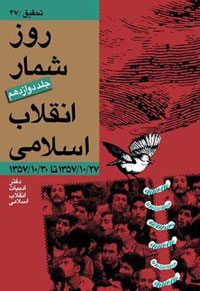
Volume 12 of "Islamic Revolution Chronology" that reviews the events of January 17, 1979 till January 20, 1979 will be published in a few months by Sooreye Mehr Publications.
The wide variety of political developments in late January of 1979 was to the extent that one volume of "Islamic Revolution Chronology" (volume 12) encompassed to the period of January 17, 1979 till January 20, 1979. In this volume it is pointed to the events and incidents such as developments on people's oppositions against Pahlavi regime and Shapoor Bakhtiyar government and great reflection of Imam Khomeini's messages and speeches in news agencies and domestic and foreign press, military and hooligan offensive in many cities and the resignation of a group of National Assembly Representatives and Minister of Justice, hunger strike of some of Airmen, preparation and planning for Arba’een, preparing statute of the Council of Islamic Revolution , release of some of political prisoners and etc… and finally national demonstration on Arba’een.
 The extensive developments during this short period could be examined according to two major issues:
A. Revolutionary campaign front including:
1. Leadership of Islamic Revolution
2. National protests on Arba’een
3. Clergy and people
B. Government front:
1. Shah and Shapoor Bakhtiyar
2. Militaries
3. Western countries and Israel
This volume of "Islamic Revolution Chronology" has been set and written by Mirza Baqer Aliyan Nezhad with the supervision of Mr. Hedayatallah Behbūdi, the Director of the Bureau for the Islamic Revolution Literature.
Aliyan Nezhad who entrusted volume 12 of "Islamic Revolution Chronology" to Sooreye Mehr publication one year ago in his talks with Ketab-e-Iran news agency expressed: “This book has been produced at the Bureau for Islamic Revolution Literature and has been devoted to the most important events and incidents of Revolution during January 17, 1979 till January 20, 1979.â€
He explained about the most important events of those days: “Interview conducted with Imam Khomeini at Neauphle le Chateau, public protests on January 17, 1979 especially at Khuzestan Province that army forces of Shah attacked people by tanks because of opposition against people's happiness for Shah's fled from Iran, and protests in all cities of the country on January 19, 1979, are the major events.â€
Aliyan Nezhad added: “In volume 12 of "Islamic Revolution Chronology" all the aspects related to the Revolution such as the instructions issued by Imam Khomeini in Neauphle le Chateau, internal actions of militant groups, the formation of Revolutionary Council, the measures of welcoming committee of Imam and also the measures of opposition and revolutionary fronts have been encompassed. In the revolutionary front the clergies' actions are viewed and in opposition front the military actions of Bakhtiyar government and the presence of American General Huyser in Iran has been investigated.â€
He told about the sources of this book: “This book is derived from vivid sources such as Kayhan and Etellaat newspapers and books and its hidden sources are SAVAK documents that are published after revolution. Beside these sources the-then confidential bulletins have been investigated and the material of some foreign publications have been selected and added to this book after translation.â€
Aliyan Nezhad continued: “This volume of Revolution Chronology is pictorial and includes 200 pictures from personalities, public protests and magazines, newspaper clippings and some documents and caricatures of that period. The pictures are prepared from archive of Etellaat Newspaper and the Bureau for Islamic Revolution Literature of Hozeh-ye Honari (Arts Center).â€
He said about the audience of this book: “The people interested in Revolution history and especially researchers and students of history and political science could gain information from this 512 pages book.â€
Translated by: Atiyeh As’ad
Source: 22bahman.ir
Number of Visits: 5504
Share


The latest
- Encountering Oral History from a Theatrical Perspective
- 100 Questions/51
- The Third Regiment: Memoirs of an Iraqi Prisoner of War-51
- Family History; A Legacy for Future Generations
- Oral History News for August 23rd – September 22nd 2026
- Report of the Third Meeting of the Specialized Roundtable on Oral History of the Country
- 100 Questions/50
- The Third Regiment: Memoirs of an Iraqi Prisoner of War - 50
Most visited
- Narrative and the "War of Narratives" in the Era of Resistance and Imposed Wars
- Memories of Mohammad Boloori
- The Third Regiment: Memoirs of an Iraqi Prisoner of War - 50
- Report of the Third Meeting of the Specialized Roundtable on Oral History of the Country
- 100 Questions/50
- Oral History News for August 23rd – September 22nd 2026
- Family History; A Legacy for Future Generations
- The Third Regiment: Memoirs of an Iraqi Prisoner of War-51
100 Questions / 43
How can narrators and interviewers reach a common understanding?We asked several researchers and activists in the field of oral history to express their views on oral history questions. The names of each participant are listed at the beginning of their answers, and the text of all answers will be published on this portal by the end of the week.
Documentary Pathology of the US Embassy Documents
The Necessity of Scientific Rereading and Content Analysis of DocumentsMore than four decades have passed since the publication of the first collections of documents from the US Embassy in Tehran. However, despite the relatively easy access to this treasure trove of documents, systematic research exploitation of it has not been adequate. We still do not have a “comprehensive picture” of the content of these 11,000 documents.
100 Questions / 42
What is the importance of the narrator and interviewers shared understanding of the past in oral history?We asked several researchers and activists in the field of oral history to express their views on oral history questions. The names of each participant are listed at the beginning of their answers, and the text of all the answers will be published on this portal by the end of the week.
Validation: Challenges and Necessities
Where does truth stand in oral history? How can the correctness of a narrative be recognized? Does fact-checking matter? If there is exaggeration in the reporting of some accounts, how can it be detected? Is it possible to record an event accurately through the recording of a narrative? Readers and users of oral history works are often faced with these questions, and sometimes encounter doubts about some oral history works.
