
Moments of Silence Conference
16 March 2011
The Authentic Literary Narratives of the Iran-Iraq War (1980-1988)
Overview
This conference will provide a space for literary and artistic expressions based on the Iran-Iraq War, as developed in these two societies. Situating these literary productions in their historical contexts, this conference will demonstrate how official efforts to appropriate the narratives of war have created the problem of authenticity for these narratives. This forum is particularly invested in highlighting historically marginalized voices, such as the role of minorities, and advancing a theoretical framework that transcends nationalist and political paradigms.
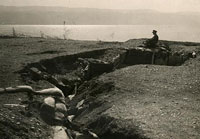
Dates
March 15-17, 2011
RSVP
Conference Conveners
Mohammad Mehdi Khorrami Professor of Persian, NYU
Shouleh Vatanabadi Professor of Global Cultures, NYU
Contact
Arta Khakpour arta.khakpour@nyu.edu
Location
Intercontinental Hotel, Abu Dhabi
Agenda
March 15, 2011
• 10:00 am – 12:00 pm Panel 1: Transnational Contexts: Inter-connected Histories, Geographies and Languages
• 1:00 – 2:30 pm Panel 2: Theorizing Cultural Expressions of War
• 3:00 – 4:30 pm Readings: Excerpts from Literary Production of the Iran-Iraq War
• 5:00 – 6:15 pm Film: Kilometer Zero by Hinêr Saleem
March 16, 2011
• 9:30 – 11:00 am Panel 3: Literary Narratives of War
• 11:30 am – 1:00 pm Panel 4: War through Visual Representations
• 2:00 – 3:30 pm Panel 5: War and Accommodating Literary Genres
• 4:00 – 5:30 pm Film (excerpts)
March 17, 2011
• 2:00 – 3:00 pm Thematic Conversation
• 7:00 – 8:00 pm Public Lecture: Survival: In the Folds of War
Please Note Location: Abu Dhabi National Exhibition Centre
Source: http://nyuad.nyu.edu/institute/conference.Moments.of.Silence.html
Number of Visits: 7743
Share


The latest
- 100 Questions/ 52
- The Third Regiment: Memoirs of an Iraqi Prisoner of War - 52
- A year of non-stop questioning
- Memories of Mrs. Jumay Ahmed Karoufi
- Encountering Oral History from a Theatrical Perspective
- 100 Questions/51
- The Third Regiment: Memoirs of an Iraqi Prisoner of War-51
- Family History; A Legacy for Future Generations
Most visited
- Report of the Third Meeting of the Specialized Roundtable on Oral History of the Country
- Oral History News for August 23rd – September 22nd 2026
- 100 Questions/50
- The Third Regiment: Memoirs of an Iraqi Prisoner of War-51
- Family History; A Legacy for Future Generations
- Encountering Oral History from a Theatrical Perspective
- 100 Questions/51
- A year of non-stop questioning
100 Questions / 43
How can narrators and interviewers reach a common understanding?We asked several researchers and activists in the field of oral history to express their views on oral history questions. The names of each participant are listed at the beginning of their answers, and the text of all answers will be published on this portal by the end of the week.
Documentary Pathology of the US Embassy Documents
The Necessity of Scientific Rereading and Content Analysis of DocumentsMore than four decades have passed since the publication of the first collections of documents from the US Embassy in Tehran. However, despite the relatively easy access to this treasure trove of documents, systematic research exploitation of it has not been adequate. We still do not have a “comprehensive picture” of the content of these 11,000 documents.
100 Questions / 42
What is the importance of the narrator and interviewers shared understanding of the past in oral history?We asked several researchers and activists in the field of oral history to express their views on oral history questions. The names of each participant are listed at the beginning of their answers, and the text of all the answers will be published on this portal by the end of the week.
Validation: Challenges and Necessities
Where does truth stand in oral history? How can the correctness of a narrative be recognized? Does fact-checking matter? If there is exaggeration in the reporting of some accounts, how can it be detected? Is it possible to record an event accurately through the recording of a narrative? Readers and users of oral history works are often faced with these questions, and sometimes encounter doubts about some oral history works.
