
The questions of oral historys interview (part I)
A Strong Interview Is Tied with Research
Akram Dashtban
Translated by: Fazel Shirzad
2018-6-19
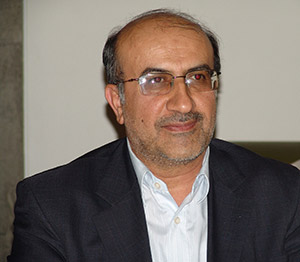
Note: Following report is based on an invitation in which history experts are asked questions about oral history. In this regard, one of experts, as his perspective, has answered to one of questions titled "what are characteristics of the questions of oral history's interview"; Kianoush Haftlang (PhD) presented his responses in the form of notes that we'll read these comments as follows.
■
Oral history studies on the knowledge and experiences of informed individuals about events in an active, informed, and targeted conversation, and records audio and video tapes This method (i.e. oral history) is an important and necessary tool for understanding the past not so distant, and preserving the past of each individual and historical flows in various dimensions for the future.
Subject-tracking in oral history (interview's topic)
The first step for a creative dialogue and interview in oral history is selecting the subject or topic for interview. We must clearly know someone who we are going to interview with, and something what we are going to speak about, is the subject of interview about interviewee? Or someone else? What you are going to speak about?
Choosing a case and good subject is the first condition for conducting a substantive interview. Interview means conversation. But in practice, each of these words has different meanings and uses, and an interviewer needs to pay attention to them.
When two people communicate with each other verbally, conversation takes place. But necessarily this conversation does not mean an interview. Many telephonic talks and daily dialogues of people are conversational one. Interviews take place in the form of journalistic and oral history. In the interview, reporter asks number of questions for interviewee and get answers, while these questions are independent in the same unity.
In many cases, the first and second questions are not related to each other and are exactly made in the form of a written interview to answer the question of journalist who is not present. But questions, in spite of united, are interconnected and related. There is a kind of challenge between parties. In other words, it involves controversy or discussion. The first question, that is raised, is always in the aspect of the interview, and if reporter and interviewer are master on subject and familiar with interview techniques, s/he will be able to direct it toward a conversation.
Preparation before the interview
In addition to familiar with technique and methodology, interviewer should carefully study on topic of interview: before interviewing about subject, the use of archives, the study of document related to subject and the study of related subject books are such examples of gaining information. Professional researcher makes an interview stronger, more rigorous and richer forces.
Interviewee's situations in oral history
Interviewee should be informed before doing interview and given outline to prepare for herself/ himself, preferably write down or keep in his mind. The framework of interview should be already specified. We should not forget that we want response for unknown, not known, each question should have exact timing, the interviewer should take subject into consideration, and recorded interview should be transcribed, edited and legal issues should be raised and edited text should be signed by narrator.
How to make a fascinating interview
In addition information and expertise required on the subject of interview, the techniques of interview should also be mastered in order to provide a great interview. You should have full knowledge on the characteristics of a professional interview. How an interview is started, promoted and finished, providing portraiture and description in an interview, take notes and how to use them, and finally the way of arranging an interview are the points that if they are paid attention and considered, they causes interview to be enjoyable and interesting for readers.
Iranian oral history website asks question to experts about oral history, and publish responses to readers. Total responses will have remarkable results. If you have question, please feel free to submit it via this page to read comments from experts of oral history!
Number of Visits: 4659



The latest
Memoirs of Hujjat al-Islam Reza Motalebi
Hujjat al-Islam Reza Motalebi is a cleric from Isfahan. Before the revolution, he was the imam of the Fallah Mosque – which was later renamed Abuzar Mosque. By his presence and efforts, Abuzar Mosque soon became a base for supporters of the Imam and the revolution. After the victory of the revolution, he played a role in uniting forces and maintaining political vitality in southwest Tehran.The Necessity of Receiving Feedback in Oral History
Whenever we engage in a task, we naturally seek ways to evaluate our performance — to correct shortcomings and enhance strengths. Such refinement is only possible through the feedback we receive from others. Consider, for instance, a basketball player whose shots are consistently accurate; should he begin shooting blindfolded, his success rate would rapidly decline, as he would be deprived of essential feedback from each attempt.Sir Saeed
The book “Sir Saeed” is a documentary [narrative] of the life of martyr Seyyed Mohammad Saeed Jafari, written by Mohammad Mehdi Hemmati and published by Rahiyar Publications. In March 2024, this book was recognized as one of the selected documentary biographies in the 21st edition of the Sacred Defense Book of the Year Award. The following text is a review on the mentioned book.Morteza Tavakoli Narrates Student Activities
I am from Isfahan, born in 1336 (1957). I entered Mashhad University with a bag of fiery feelings and a desire for rights and freedom. Less than three months into the academic year, I was arrested in Azar 1355 (November 1976), or perhaps in 1354 (1975). I was detained for about 35 days. The reason for my arrest was that we gathered like-minded students in the Faculty of Literature on 16th of Azar ...
