
The Questions of Oral History Interview (Part III)
Interviewer Should Use Ethology
Akram Dashtban
Translated by Ruhollah Golmoradi
2018-7-3
The following text was prepared based on the call for questions on oral history in which from perspective of one of those who has produced works by using this method, the question "what are characteristics of oral history interview questions?" has been answered.
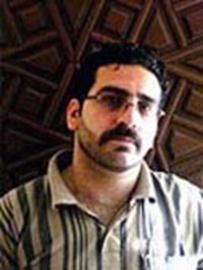
Saying that there are so many books on how news interviews have been published and one of main strategies in oral history interview is interviewee's intimacy with memory teller, Hasan Shirdel added, "An interview in oral history which is conducted by interviewer is different from news interview. In an interview of oral history, interviewer should use psychological techniques and know ethology. When he/she goes to a warrior to record his memories, she/he has to study lives of people who had experienced the war, or narrator's friends from whom some books have been published before asking and conducting the interview; or, if she/he does not have access to books, attend in their friendly meetings so that she/he can communicate with interviewee or narrator's living environment and ask applied questions based on it. When interviewer goes to narrator with this background, he/she can persuade narrator to carefully remember memories with challenging questions derived from similar experiences. Interviewer in oral history walks on the edge of the sword, and if he/she makes a mistake, he/she enters story space, and if proceed properly it would be the same oral history.
Pointing out that for oral history in field of activity of this method in our country there is still no original and defined basis for interview, he says, "no fundamental basis have been adjusted and determined in Hozeh Honari as a center that addresses this topic. In our country, one who wants to go to story writing read books of Ebrahim Younesi and Jamal Mirsadeghi and by referring to their books will become familiar with framework of story writing; but in field of oral history, there has not been any book in subject of biography interview, so each person raise a subject as he/she likes and writes a book, and then wrestle with whether introduce the book as memory or oral history.
■
Iranian Oral History Website raises questions about oral history for experts and practitioners of this subject and releases answers for the audience. Responses altogether will have significant results. If you have any questions, please post it in this page in order to read comments of experts and practitioners of oral history about it.
A Strong Interview Is Tied with Research
Interview Is the Heart of Oral History
Number of Visits: 5898
Share


The latest
- 100 Questions/48
- The Third Regiment: Memoirs of an Iraqi Prisoner of War - 48
- Seventh Theory: The evolutionary duality of document and narrative
- Memories of Davoud Molaei
- Preparing a report for Khorasan Radio and Television
- 100 Questions/47
- The Third Regiment: Memoirs of an Iraqi Prisoner of War - 47
- Servants Narration of the Religious Rituals of the Holy Shrine of Imam Reza (AS) From Tradition to Lived Experience
Most visited
- 100 Questions/46
- Servants Narration of the Religious Rituals of the Holy Shrine of Imam Reza (AS) From Tradition to Lived Experience
- Memories of Nasrollah Fat’hian
- Memories of Hossein Ali Najafian
- The Third Regiment: Memoirs of an Iraqi Prisoner of War - 47
- 100 Questions/47
- Preparing a report for Khorasan Radio and Television
- Memories of Davoud Molaei
100 Questions / 43
How can narrators and interviewers reach a common understanding?We asked several researchers and activists in the field of oral history to express their views on oral history questions. The names of each participant are listed at the beginning of their answers, and the text of all answers will be published on this portal by the end of the week.
Documentary Pathology of the US Embassy Documents
The Necessity of Scientific Rereading and Content Analysis of DocumentsMore than four decades have passed since the publication of the first collections of documents from the US Embassy in Tehran. However, despite the relatively easy access to this treasure trove of documents, systematic research exploitation of it has not been adequate. We still do not have a “comprehensive picture” of the content of these 11,000 documents.
100 Questions / 42
What is the importance of the narrator and interviewers shared understanding of the past in oral history?We asked several researchers and activists in the field of oral history to express their views on oral history questions. The names of each participant are listed at the beginning of their answers, and the text of all the answers will be published on this portal by the end of the week.
Validation: Challenges and Necessities
Where does truth stand in oral history? How can the correctness of a narrative be recognized? Does fact-checking matter? If there is exaggeration in the reporting of some accounts, how can it be detected? Is it possible to record an event accurately through the recording of a narrative? Readers and users of oral history works are often faced with these questions, and sometimes encounter doubts about some oral history works.
