
The importance of auditory and visual memory in oral history
Hamid Ghazvini
Translated by: Fazel Shizrad
2019-9-11
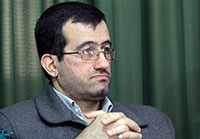 All humans have had the experience of remembering forgotten memoirs by seeing a particular object or photo, or hearing someone's voice. Such cases are directly related to human visual and auditory memory.
Psychologists believe that humans usually memorize their memories with a sign, such as a place or a particular image. For this reason, everyone, at first, tries to visualize mentally observations of past events and then expresses memories.
Experience and study of psychologists have shown that people who close their eyes while they are remembering memories are more successful. Because when they closed eyes, the connection between the mind and outside environment is disconnected and one can more easily visualize mentally.
This type of memory is widely used to learn and recognize lessons and skills related to childhood and school or to assist the elderly and to treat and control some mental and neurodegenerative diseases.
Some people have good visual and auditory memory and remember a lot of information as soon as they see a picture or hear a related sound, but there are also some who have serious problems.
One of the tasks of oral history interviewer is to stimulate this type of memory with the aim of reviving the interviewee's memories by asking detailed questions. Naturally, this may be difficult because of the passage of time or people's age. Sometimes different photos are replaced by other ones in narrator's mind and cause him to be encountered with trouble. It is even possible that a defective or inaccurate picture of some situations may be mistaken in expressing memories.
Some measures can be instituted to enhance and refine the visual and auditory memory, while patience and observance of the narrator's physical and mental state. It is important to note that stimulation of auditory and visual memory is a slow and careful process and any acceleration will impair the process.
Some measures are as follows:
1. Looking at old pictures and documents.
2. Watching movies that are directly or indirectly related to the subject of interview. (Documentary or fiction).
3. Listening to audio files at the same time.
4. Listening to the songs and music of that era.
5. Visiting some old friends and relatives and people related to the subject of interview.
6. Visiting some ancient objects.
7. Accompanying the narrator and visiting the interview areas and locations.
8. Tracing related images, such as a drawing of prison's room or operational area.
9. Seeing or referring to symbols of same era as flags, banners, tablets, etc.
10. Reading and repeating popular songs of slogans at the same time.
Number of Visits: 6061
Share


The latest
- Report of the Third Meeting of the Specialized Roundtable on Oral History of the Country
- 100 Questions/50
- The Third Regiment: Memoirs of an Iraqi Prisoner of War - 50
- Narrative and the "War of Narratives" in the Era of Resistance and Imposed Wars
- Memories of Mohammad Boloori
- Call for Fundamental Questions in the Field of Oral History
- 100 Questions/49
- The Third Regiment: Memoirs of an Iraqi Prisoner of War - 49
Most visited
- Jasem Ghazbanpour's narration of the first day of the war in Khorramshahr
- Memoirs of Ali Fadaei
- The Third Regiment: Memoirs of an Iraqi Prisoner of War - 49
- 100 Questions/49
- Narrative and the "War of Narratives" in the Era of Resistance and Imposed Wars
- Memories of Mohammad Boloori
- Call for Fundamental Questions in the Field of Oral History
- The Third Regiment: Memoirs of an Iraqi Prisoner of War - 50
100 Questions / 43
How can narrators and interviewers reach a common understanding?We asked several researchers and activists in the field of oral history to express their views on oral history questions. The names of each participant are listed at the beginning of their answers, and the text of all answers will be published on this portal by the end of the week.
Documentary Pathology of the US Embassy Documents
The Necessity of Scientific Rereading and Content Analysis of DocumentsMore than four decades have passed since the publication of the first collections of documents from the US Embassy in Tehran. However, despite the relatively easy access to this treasure trove of documents, systematic research exploitation of it has not been adequate. We still do not have a “comprehensive picture” of the content of these 11,000 documents.
100 Questions / 42
What is the importance of the narrator and interviewers shared understanding of the past in oral history?We asked several researchers and activists in the field of oral history to express their views on oral history questions. The names of each participant are listed at the beginning of their answers, and the text of all the answers will be published on this portal by the end of the week.
Validation: Challenges and Necessities
Where does truth stand in oral history? How can the correctness of a narrative be recognized? Does fact-checking matter? If there is exaggeration in the reporting of some accounts, how can it be detected? Is it possible to record an event accurately through the recording of a narrative? Readers and users of oral history works are often faced with these questions, and sometimes encounter doubts about some oral history works.
