
Dr. Abolfazl Hasanabadi expresses
Oral history programs and plans in Astan Quds Razavi
Maryam Assadi Jafari
Translated by M. B. Khoshnevisan
2019-6-26
The Head of the Document and Press Center of Astan Quds Razavi announced that "Oral History of Nazr (vowing to make an offering) and Endowment" and "Oral History of the Old Families of the Shrine" are the latest plans of the center, and said, "The registration of the endowments of Astan Quds Razavi in different cities is a long run project. The Department of Family Studies has been set up recently in the center and is active as the subset of the professional and studies area of the Document and Press Center of Astan Quds Razavi."
In an interview with the Iranian Oral History website, Dr. Abolfazl Hasanabadi explained about the plans ahead of the center in the current Iranian year and said, "we started oral history interviews since 1377 in solar calendar (1998) and now the life of the activity has reached to twenty years and we have archived twenty thousand hours of interviews. These interviews have been conducted in different fields most part of which are in the areas of the history of Astan Quds, history of Razavi shrine and history of Mashhad."
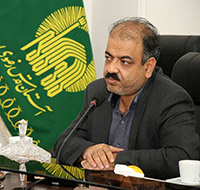
Referring to the plan "Local History of Khorasan" which started some eight years ago, he stressed, "The plan in some towns – especially in the places where the Astan Quds Razavi has endowments – is under execution and we carry out the documentation of information and interviews with two main goals: first, for reviewing of the cultural impact of the endowments and the libraries of Astan Quds Razavi in the towns – especially in Neishabour and Torbat Heidarieh – and second for registration of local history."
Hasanabadi introduced the plan "Oral History of Nzar and Endowment" as the newest project of the Document and Press Center of Astan Quds Razavi in the current years and added, "We follow up this project specifically. The registration of the endowments of Astan Quds Razavi in different cities is a long run project. The first thing that we have done is to interview the individuals who have endowments and Nazr and our aim is to have an outcome of the state of the endowments of Astan Quds Razavi, endowers as well as encouragement and promotion of the culture of endowment for the next forty years. Astan Quds Razavi in the cities inside and outside Khorasan Razavi Province especially in Yazd, Kerman and Isfahan has endowments. We are conducting interviews in this regard. The plan "Oral History of Nazr and Endowment" takes at least five years. It has started since last year, but it will be followed up more seriously this year."
The Head of the Document and Press Center of Astan Quds Razavi also introduced the plan "oral History of the Old Families of the Shrine" as another important pan of the center, and added, "This plan has started almost two years ago. The Department of Family Studies has been set up recently in the center and is active as the subset of the professional and studies area of the Document and Press Center of Astan Quds Razavi. At present, we are conducting interviews with the old families and servants of the Razavi shrine. We even have families who are the servants of the holy shrine of Imam Reza (PBUH) for three to four hundred years."
In response to a question about how the professional forces are recruited in oral history projects of Astan Quds Razavi, he said, " Our previous procedure was that the individuals with a master's degree in history and students whose theses were related to the Islamic Revolution were prioritized and we only taught them oral history. By counting the interviewers and transcribers, we have some fifteen professional and specialized forces who have more than fifteen years of experience. We are among few centers which have a full archival structure. The interviews after transcription are indexed and its information enters the system. In fact, the content of interviews is searchable on the Internet. The center also has a separate online database that can provide content search for all interviews for researchers inside the center".
In the end, Dr. Abolfazl Hasanabadi reviewed a number of expert meetings in the area of oral history due to be held in the near future and noted, "We are going to hold two meetings in the area of medical history of Mashhad which will review the written documents and oral history of medic in Mashhad. The meeting "Future Research of Oral History in Iran" will also be held in autumn with the cooperation of Iranian Oral History Association so that the mechanisms and the future of oral history are reviewed. Thus, we will have an inner view to Astan Quds this year and promote the oral history of the province to a satisfactory point."
Number of Visits: 5134
Share


The latest
- A year of non-stop questioning
- Memories of Mrs. Jumay Ahmed Karoufi
- Encountering Oral History from a Theatrical Perspective
- 100 Questions/51
- The Third Regiment: Memoirs of an Iraqi Prisoner of War-51
- Family History; A Legacy for Future Generations
- Oral History News for August 23rd – September 22nd 2026
- Report of the Third Meeting of the Specialized Roundtable on Oral History of the Country
Most visited
- The Third Regiment: Memoirs of an Iraqi Prisoner of War - 50
- Report of the Third Meeting of the Specialized Roundtable on Oral History of the Country
- 100 Questions/50
- Oral History News for August 23rd – September 22nd 2026
- Family History; A Legacy for Future Generations
- The Third Regiment: Memoirs of an Iraqi Prisoner of War-51
- Encountering Oral History from a Theatrical Perspective
- 100 Questions/51
100 Questions / 43
How can narrators and interviewers reach a common understanding?We asked several researchers and activists in the field of oral history to express their views on oral history questions. The names of each participant are listed at the beginning of their answers, and the text of all answers will be published on this portal by the end of the week.
Documentary Pathology of the US Embassy Documents
The Necessity of Scientific Rereading and Content Analysis of DocumentsMore than four decades have passed since the publication of the first collections of documents from the US Embassy in Tehran. However, despite the relatively easy access to this treasure trove of documents, systematic research exploitation of it has not been adequate. We still do not have a “comprehensive picture” of the content of these 11,000 documents.
100 Questions / 42
What is the importance of the narrator and interviewers shared understanding of the past in oral history?We asked several researchers and activists in the field of oral history to express their views on oral history questions. The names of each participant are listed at the beginning of their answers, and the text of all the answers will be published on this portal by the end of the week.
Validation: Challenges and Necessities
Where does truth stand in oral history? How can the correctness of a narrative be recognized? Does fact-checking matter? If there is exaggeration in the reporting of some accounts, how can it be detected? Is it possible to record an event accurately through the recording of a narrative? Readers and users of oral history works are often faced with these questions, and sometimes encounter doubts about some oral history works.
