
Oral History & the Youth
Morteza Nouraie (PhD)
Translated by Natalie Haghverdian
2019-6-7
Asking questions forms the basis of oral history and historical understanding. Asking questions in a community requires practice and such practice should start in early ages of youth. There have been many efforts in training oral historians; however there has been no focused and technical training for various age groups.
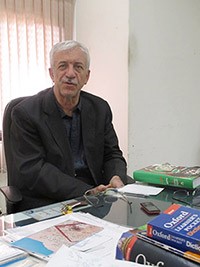
Today, based on a series of basic measures and theoretic frameworks it is possible to take the first steps towards involving the adolescents and the youth in oral history for them to discover their past and any era of the past that they are interested in and systematically pursue their social goals. The objective of this article is to stress the necessity and to offer training strategies to discover the hidden treasure of new and unprecedented questions asked by this age group; questions that require to be asked and receive productive answers.
In light of Youth Oral History training which is also known as “Youth Questions” two main pillars are proposed.
- The first objective is based on technical theories which involves the youth with the oral history. In fact, every generation has its own questions for the past based on their trend in dialogue. Hence, the objective has to be designed based on the future needs to answer their requirements. What we, as the founding generation, writes is the address of the past we come from: so, best case scenario, the audience of we write is our generation. These addresses are roadmaps for the future; the geography of which shall remain untouched. In other words, historical texts have few young audience the reason of which might be that the productions are not intended for the youth.
The general history writing has expired long ago. Obviously, the nature and perspective of time in the past is important in the future which shall be pursued by the youth. Hence, sufficient focus on the questions raised by this group is essential. In light of this, professional historians shall discover and predict the questions of this generation.
On the other hand, the audience of classic history is limited since those seeking historical books are unable to find the necessities of their era in the historical resources. So, I believe that historiography shall be advocated in the form of asking questions in the young generation. However, this subject has limited space in the formal curricula but this technique has to productively find its way in the future generations.
- The second objective is transforming oral history into a social concept. Inter-generation and cross-generation dialogue is missing in our contemporary Iranian society. It means that the youth have no dialogue with the older generations which results in a gap and subsequently social unrest. One strategy to resolve these issues is to advocate asking questions which will help them to ask questions on the topics of their interest from the older generations.
Based on these perspectives, it seems that oral history education and transferring its mechanism to the youth is of great importance. These trainings might be designed in any form. Due considerations are required to avoid proposing research frameworks or suggesting potential topics in designing the educational outline. Any effort to lead and direct the mind and taste of the audience results in emerge of doping questions which shall never be fruitful. The main objective of this educational outline is to discover: “where are the questions hidden?”
Accordingly, there is no supposition of what the probable questions might be in the minds of the youth but some predictions might be made based on their age and daily issues they are dealing with. However, these guesses shall not be presented as hypotheses. Efforts to present such hypotheses means an effort to prove our own hypotheses. The effort should be to advocate systematic and meaningful dialogue in the youth.
Also, the main focus has to be on providing the analytical tools, narration and dialogue to them for the process to produce expected outcomes. For instance, any news in virtual sites impresses us, the fact that where the incident has been? Why? How? Are there proofs of such incidents or not?...are all questions to be used in such practices. In this way, the new generation, proactively involved in the virtual world and its mental development practices asking questions based on the principles of oral history interview. It is expected that this method of training will empower their critical thinking and also develop one method of social involvement amongst them. In light of this, the process of oral history is the main focus and not the outcome.
The youth social involvement in general might be concisely classified as follows to be used in training workshops:
- To develop cultural understanding and elitism to better understand social and cultural transformations and causality.
- To develop the skills of empathy with generations based on the key principle of dialogue in oral history.
- To develop the skills of critical and analytical thinking and screening in acceptance or criticism of subjects; “Not to accept any and every word.”
- Proper selection while screening and applying standards as a key education strategy.
- To understand the value of historical evidence particularly in taking sides or discussing controversial concepts.
- To develop the ability and capacity to record narratives of different perspectives.
Isfahan
29 May 2019
Number of Visits: 5950
Share


The latest
Most visited
Call for Fundamental Questions in the Field of Oral History
The Oral History of Iran website invites all researchers, experts, professors, and activists in the field of oral history to share their views and experiences with the audience on the most important questions in this field. We ask you to raise a maximum of 10 fundamental questions in the field of oral history that every researcher, interviewer, and oral history enthusiast should think about, and write an answer for each in about 200 words.100 Questions / 43
How can narrators and interviewers reach a common understanding?We asked several researchers and activists in the field of oral history to express their views on oral history questions. The names of each participant are listed at the beginning of their answers, and the text of all answers will be published on this portal by the end of the week.
Documentary Pathology of the US Embassy Documents
The Necessity of Scientific Rereading and Content Analysis of DocumentsMore than four decades have passed since the publication of the first collections of documents from the US Embassy in Tehran. However, despite the relatively easy access to this treasure trove of documents, systematic research exploitation of it has not been adequate. We still do not have a “comprehensive picture” of the content of these 11,000 documents.
100 Questions / 42
What is the importance of the narrator and interviewers shared understanding of the past in oral history?We asked several researchers and activists in the field of oral history to express their views on oral history questions. The names of each participant are listed at the beginning of their answers, and the text of all the answers will be published on this portal by the end of the week.

