
Mansoureh Ghadiri Talked about Behjat Afraz
You must be both a mother and a father
Narrator: Mansoureh Ghadiri*
Adjusted by Maryam Rajabi
Translated by Ruhollah Golmoradi
2019-4-16
My wife had the longest captivity and I got the most energy from Ms. Behjat Afraz. I was at the age of 28 when my husband became missing, and when it became clear he was captured, I was very busy and I didn't have leisure time; like a soldier who wears military boot in the morning, I slept upon my book and pamphlet. I was a professor at Shahid Rajaee University and from there I went to Allameh Amini High school as a deputy and when I returned, I tutored mathematic for children of my colleagues and I was not beholden to anyone except God.
My husband was completely missing in early days of his captivity; after a while, a letter came from him; after that, for a year and a half to two years, we did not even have one line letter from him, and when, after this time, a three line letter arrived from My husband, my father read the letter, and while he was just at the age of 57, he stroke a heart attack and we buried him in the morning! In the situation I did not droop my spirit. I resorted to Imam Ali and asked God to help me.
Mrs. Afraz gave a lot of energy to family of the captives and missing people. Shift work did not matter to him at all, and whenever I came from Karaj she was still at work. My field of study was psychological counseling, and for what I was doing, I might feel a little more responsibility than others. Mrs. Afraz sometimes got some resolutions from me in these cases. I remember that I turned back from university and high school one day, and I was very tired. She called me and said you just come here fast. I became worried and asked anything happened to Morsal? She said no, she told it is about wife of one of the captive.
When I arrived, I saw that a young woman sat there and had a beautiful girlfriend photo in her hand, and brought oil to burn herself! Mrs. Afraz, who was so solvent of problems, no longer knew what she should do in front of this woman. She asked me to tell her some of my problems to calm her down. I went into the room and talked to him. I put Quran in front of him, and finally I convinced him and said, "Do you think if you kill yourself, problem of this kid would be solved?" No! You must be both a mother and a father.
________________________________________
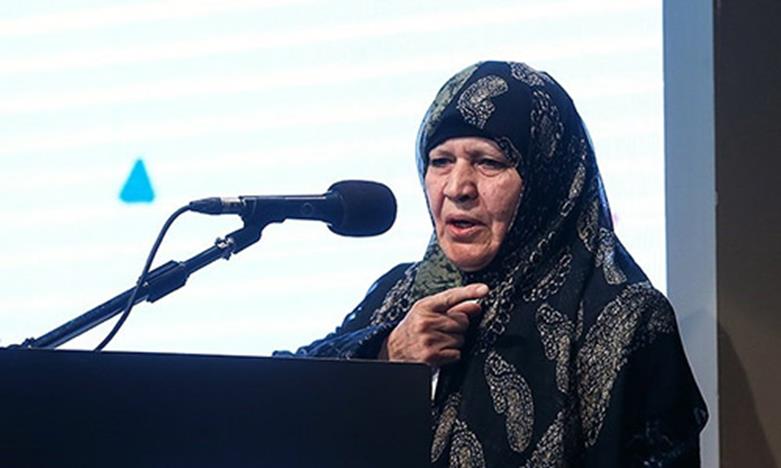
* Mansureh Ghadiri is wife of freedman Major General Morsal Ahangari. His spouse was captured by Saddam's army for ten years. Ms. Ghadiri was selected as a sample counselor in the country and has 31 years of service in education. She also has worked as a faculty member at Shahid Rajaee University, a manager and deputy in various high schools, and a 10-year psychology counselor at vocational schools and high schools. Mansoureh Ghadiri spoke in the program "Lady of Rain: Commemoration of Behjat Afraz, Om ol-Osara (mother of prisoners of the war)", which was held in Sooreh Hall of Hozeh Honari on the evening Wednesday, March 6, 2019.
Number of Visits: 6080



The latest
- 100 Questions/47
- The Third Regiment: Memoirs of an Iraqi Prisoner of War - 47
- Servants Narration of the Religious Rituals of the Holy Shrine of Imam Reza (AS) From Tradition to Lived Experience
- Memories of Nasrollah Fat’hian
- Memories of Hossein Ali Najafian
- 100 Questions/46
- The Third Regiment: Memoirs of an Iraqi Prisoner of War - 46
- Theory Six: The Inevitability of Perspective
Most visited
- 374th Night of Remembrance - 2
- 100 Questions/ 45
- Theory Six: The Inevitability of Perspective
- Memoirs of Behzad Rastegari
- The Third Regiment: Memoirs of an Iraqi Prisoner of War - 46
- 100 Questions/46
- Memories of Hossein Ali Najafian
- Servants Narration of the Religious Rituals of the Holy Shrine of Imam Reza (AS) From Tradition to Lived Experience
100 Questions / 43
How can narrators and interviewers reach a common understanding?We asked several researchers and activists in the field of oral history to express their views on oral history questions. The names of each participant are listed at the beginning of their answers, and the text of all answers will be published on this portal by the end of the week.
Documentary Pathology of the US Embassy Documents
The Necessity of Scientific Rereading and Content Analysis of DocumentsMore than four decades have passed since the publication of the first collections of documents from the US Embassy in Tehran. However, despite the relatively easy access to this treasure trove of documents, systematic research exploitation of it has not been adequate. We still do not have a “comprehensive picture” of the content of these 11,000 documents.
100 Questions / 42
What is the importance of the narrator and interviewers shared understanding of the past in oral history?We asked several researchers and activists in the field of oral history to express their views on oral history questions. The names of each participant are listed at the beginning of their answers, and the text of all the answers will be published on this portal by the end of the week.
Validation: Challenges and Necessities
Where does truth stand in oral history? How can the correctness of a narrative be recognized? Does fact-checking matter? If there is exaggeration in the reporting of some accounts, how can it be detected? Is it possible to record an event accurately through the recording of a narrative? Readers and users of oral history works are often faced with these questions, and sometimes encounter doubts about some oral history works.
