
History, Narrative of Possibility
Alireza Kamari
Translated by Natalie Haghverdian
2018-8-21
In the Name of God the Compassionate the Merciful
Greetings,
It is not easy to impress knowledgeable audience; however, considering the topic of the day, a summary of some aspects of “A L” book will be presented.
“A L” might be a telmay of character letters as applied in Quran. The letters presenting the title of the book might be a representation of the secrecy and implicit meanings of the subject; maybe due to the fact that the subject of the book goes beyond words. AL is also used for defined nouns. Hence, application of these two letters prefix to the name of the Imam might be a representation of his implicit character and considering that the letters represent both known and unknown features they are a manifestation of the characteristics of prominent men.
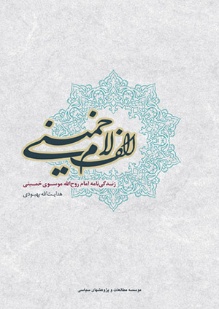
The author of this valuable work in two distinct areas points out in a beautiful and concise way the spiritual and spiritual aspects of the Imam in the field of wisdom and mysticism, and it is presented in the book, to "the discontinuity of phenomena and creatures" and "the experience of a unique world" and the survival of the Imam in this realm. The story refers to 1926 to 1944 covering pages 93 to 118 where it stresses the necessity to focus on the world of plurality and the unique spirit and accepting the presence of Almighty. It seems that the book focuses on these aspects and the visible sides of Imam’s life.
Hence, the book is defined as a historical biography. In every such book, the author should focus on the era and the historical circumstances of the subject. Of course, the long tradition of autobiography connects to a kind of literary typography. Composing autobiography the easiest of its type. Specially, when writing of a unique character with no counterpart to be compared to and shares no similarity in practical manners and wisdom with anyone else. It is why writing autobiography is a complicated task as stated by Bayhaqi[1] that “once writing one realizes how massive the work is”. Autobiographies are often written navigating the two worlds of literature and history; however, in its historical aspect it is debatable that the concept of history has changed. Nevertheless, literature has no creative and meaningful role in composing an autobiography and it is based on documents and references. It is worth mentioning that the author has had limited access to documents and references. However, the structure of the book is historical and a research in history. Rare aspects are addressed in this book which are ignored by others. There are considerable definitions especially historical analysis of various events and incidents. It is worth to discuss the historical importance and status of the book individually. From historical aspect, with respect to the content, the possibility of narration is provided and the narration in written literature is the “tongue” of the narrator in recounting the events. From this perspective, the A L Khomeini is authored with loyalty and due respect towards the Imam and the Islamic Revolution. This is where the prose and tone of the content is important and adds to the historical value of the subject matter.
Another important aspect of the book is its outline in which the chapters and titles are chosen carefully and there is a balance between various subjects and the quantity of material presented which brings all features nicely together.
The book is general and concise since too much details and narratives in defining events would add to the volume; however, in future editions some appendixes as deemed necessary might be added which will increase the volume but it is essential and a summary of the book shall be presented at the end and as professor Jafarian stated the content and references are also included by the end of the book.
Considering the limited patience of our young audience, I recommend the book to be summarized by Mr. Hedayatollah Behboudi. As the knowledgeable audience knows the book started with the origins and ancestors of Imam and moves towards the victory of the Islamic Revolution in winter of 1978. It is essential for Mr. Behboodi to compose another book to cover the period of the Islamic Revolution to the passing of Imam.
The book, with respect to autobiography focused on the Islamic Revolution is invaluable; however, due to some reasons and circumstances, since its publication, the book has not been fully and properly presented.
I would like to congratulate Mr. Behboodi as the author of this invaluable piece and also to Hojatolislam Ahmad Khazai who provided the opportunity for this book to be composed.[2]
[1] Bayhaqi was a Persian secretary, historian and author.
[2] The article above is composed by Mr. Alireza Kamari, author and scholar of history and literature and provided to the Iran Oral History Website. The font is also based on his request. Mr. Kamari presented this article in the introduction of “A L Khomeini” book. Hedayatollah Behboodi is the author of the book which was published by the Political Research and Study Institute and presented on 13 August 2018 in the conference hall of Art and Architecture Culture Study Center.
Number of Visits: 4278



The latest
- The Third Regiment: Memoirs of an Iraqi Prisoner of War-40
- Theory Four: The Crisis of Border Legitimacy
- A Look at the Book of the Restless Anonymous
- 100 Questions / 39
- A Classmates Narration of Martyr Zahra Haddad Adel
- The Third Regiment: Memoirs of an Iraqi Prisoner of War-39
- Explaining the “Use of Oral History in Writing Entries”
- 100 Questions / 38
Most visited
- 100 Questions / 38
- Oral History News of May 22nd to June 21st 2026
- Examining the Differences in the Oral History Method of the Revolution and the War
- Explaining the “Use of Oral History in Writing Entries”
- A Classmates Narration of Martyr Zahra Haddad Adel
- The Third Regiment: Memoirs of an Iraqi Prisoner of War-39
- 100 Questions / 39
- A Look at the Book of the Restless Anonymous
100 Questions/ 34
To what extent are we allowed to use narrative techniques (however simple) in compiling an oral history text?We asked several researchers and activists in the field of oral history to express their views on oral history questions. The names of each participant are listed at the beginning of their answers, and the text of all answers will be published on this portal by the end of the week.
Validation: Challenges and Necessities
Where does truth stand in oral history? How can the correctness of a narrative be recognized? Does fact-checking matter? If there is exaggeration in the reporting of some accounts, how can it be detected? Is it possible to record an event accurately through the recording of a narrative? Readers and users of oral history works are often faced with these questions, and sometimes encounter doubts about some oral history works.From Revolutionary Circles to the Military Arm of the Islamic Government
In those days, it became clear that certain institutions had to be established very quickly—institutions suited to the temperament, expectations, and lingering aspirations of the younger generation; young people who had been politically active before the Revolution and, in some cases, had been directly entangled in arrests, imprisonment, ...Authenticating Oral History: From Possibility to Necessity
The use of oral history as one of the historical sources has long been one of the principal challenges facing oral historians and those who employ it in contemporary historiography. The development of international standards for oral history, as well as IRIB standards, was intended to address the criticisms raised in this regard. The relationship between Diplomatics in written records and oral history is reciprocal.
