
Oral History Documents Have Interactive Interactions
Akram Dashntba
Translated by Natalie Haghverdian
2018-7-17
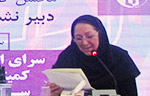
"Any historical research requires the use of some first-hand resources, hence, written sources, including the press, docuemtns and photos and oral history is another means to add to our historical knowledge," said Shafiqeh Nik Nafas, an official at the Oral History Department of the National Library and Archives of the Islamic Republic of Iran, in an interview with the oral history site of Iran. Oral history finds those with historical information about an issue or witnesses of historical incidents. In fact, oral history is a method of research in contemporary history. Of course, this requires prior research, in other words, prior to focusing on a subject matter or research concept, much study and inquiry is required to find information and resources and then design interview questions accordingly.
She continued: “a history scholar needs precise questions to conduct a thorough research. Once resources are investigated, and if the researcher has an active and sharp mind then he can design effective questions. In fact, it is interactive and the more elusive the documents the better the questions.”
Nik Nafas argued that oral history might be perceived a document as well and added: “Oral history uses documents and in turn is transformed into a firsthand document. For instance, Nationalization of the Iranian Oil Industry is based on documents and resources produced at the time including press or correspondence of governmental agencies or authorities. Oral history is also a firsthand resource and a source of study for researchers. It shall be noted that firsthand documents are produced randomly. When a journalist was reporting on Nationalization of the Oil Industry or when Mosadegh was making a correspondence, they never thought that they were producing historical resources since the main objective and goal varied at the time.”
She added: “Oral History and documents have interactive interaction and drastically affect one another. Oral history transforms into a document in the research process and the documents affect the oral history. Once research and study principles and frameworks are observed in oral history production and the material is verified then it is transformed into a firsthand historical reference.”
Nik Nafas elaborated on the application of documents and resources in oral history procedure: “There are different types of documents. For instance, when social aspects of the origin of the Islamic Revolution is investigated, social evidence of the Revolution era are studied in which newspapers are the key reference. Undoubtedly, movies produced by the Broadcasting Organization and the books published on education in that era constitute other historical resources.”
She added: “Another method is provision of field reports. For example, we can interview those who have participated in demonstration the question: “Why did you support the Revolution? Why were you unhappy? Once these questions are answered then a firsthand resource is produced. However, final conclusions shall not be drawn. Hence, other resources and documents are required and the reports of the SAVAK[1] are to be studied. Of course, documents are selected based on subject. In case of investigating a political concept you might be exposed to corrupt documents. For instance, some paragraphs of one document might be deducted. Hence, such documents are not to be fully trusted since some pages might be extracted of which we have no knowledge. In order to resolve such dilemma we have to study other resources and interviews to verify the content. Now, it is obvious that documents and historical studies are closely intertwined and complement one another to expose the audience to historical facts.
Number of Visits: 6075
Share


The latest
Most visited
Call for Fundamental Questions in the Field of Oral History
The Oral History of Iran website invites all researchers, experts, professors, and activists in the field of oral history to share their views and experiences with the audience on the most important questions in this field. We ask you to raise a maximum of 10 fundamental questions in the field of oral history that every researcher, interviewer, and oral history enthusiast should think about, and write an answer for each in about 200 words.100 Questions / 43
How can narrators and interviewers reach a common understanding?We asked several researchers and activists in the field of oral history to express their views on oral history questions. The names of each participant are listed at the beginning of their answers, and the text of all answers will be published on this portal by the end of the week.
Documentary Pathology of the US Embassy Documents
The Necessity of Scientific Rereading and Content Analysis of DocumentsMore than four decades have passed since the publication of the first collections of documents from the US Embassy in Tehran. However, despite the relatively easy access to this treasure trove of documents, systematic research exploitation of it has not been adequate. We still do not have a “comprehensive picture” of the content of these 11,000 documents.
100 Questions / 42
What is the importance of the narrator and interviewers shared understanding of the past in oral history?We asked several researchers and activists in the field of oral history to express their views on oral history questions. The names of each participant are listed at the beginning of their answers, and the text of all the answers will be published on this portal by the end of the week.

