
The questions of oral history interview (part II)
Interview Is the Heart of Oral History
Akram Dashtban
Translated by: Fazel Shirzad
2018-6-26
Note: Following report is based on an invitation in which history experts are asked questions about oral history. In this regard, one of experts who has published some works using this method, answered to one of questions in his perspective, titled "what are characteristics of the questions of oral history interview?" We will read these comments as follows.
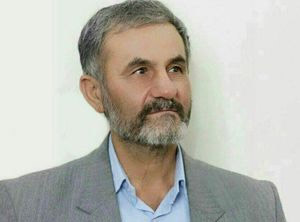
Interview can be a major factor in the formation of a book and can produce a durable book by designing practical and research questions. Doing interview, connected loop of a chain, require a scientific support. But Mohammad Mehdi Abdullah Zadeh reply the question "what are characteristics of the questions of oral history's interview?" as fallow:" Oral history is a research and includes same principles as other scientific and objective research. In a research work, when a subject is clear, interviewer goes to the research, examines theoretical issues surrounding the subject, and then sees books and researches written in this area. This kind of review helps to prevent interviewer from repetition.
He believes that if a researcher or an interviewer succeeds in research and studies topics well, he can design basic research questions. Now, if research is based on the research literature during the course of academic, the result of designing question will be based on the research."
Stating that questions what are designed by researcher or interviewer, are not definitive questions of an interview, but they specified framework, Abdullah Zadeh explains: "interviewee's knowledge and nobility about the subject of narration are more important than questions. Interviewer mastery is as important as interviewer's words because interviewer's mastery over subject can advances the process of interview in a certain direction not to engage in a way where narrator leads the interview."
He goes on to discuss how much an interviewer needs to research prior to interview, and says: "In all sciences, the study of a subject through research is indispensable, and oral history is no exception to this. When a reader studies a research literature, he finds out what hierarchy is in the direction of a subject, and what related issues and what resources there are. When interviewer is familiar with these issues, the design of the questions is done with the program. When one goes ahead through study, s/he predicts the probable duration of interview and provides an evaluation of it using important research tools. Research findings have value and validity and can turn the result into a readable work."
Abdullah Zadeh states that research questions include open sub-questions, and explains: "When narrator's answers do not fulfill interviewer, the interviewer will get help some questions during the interview and direct it so that narrator not to be stay away from main goal."
He goes on to explain the design of oral history interview’s techniques and stated that everything is related to research literature, and added: "I will describe the subject to you with a simple example; Assuming execution of artistic programs in captivity is the subject of an oral history activity; person who comes to this subject must have accurate information about the climate of captive's camps and find out what activities the prisoners have had in the field of art during the captivity. If narrator speak about his presence in the theater, the interviewer should ask more detailed questions, such as; what theater were you playing? Who were the members of group? When was it being shown? Did you play comedy role? Who were actors? And such questions can be asked. When research is challenged, here, interviewer needs to go to people who were present at the scene to receive answers, or other books of the nations are in same experience and printed it". The author of memories added: "Interviewer needs to do an in-depth study and find out what others have done in that field and what s/he wants to do something new. Interviewer must go through new findings and get through the scientific process and get familiar with the questions in order to arrive at a desirable process."
■
Iranian oral history website asks question to experts about oral history, and publish responses to readers. Total responses will have remarkable results. If you have question, please feel free to submit it via this page to read comments from experts of oral history!
Number of Visits: 6548
Share


The latest
- 100 Questions/49
- The Third Regiment: Memoirs of an Iraqi Prisoner of War - 49
- Jasem Ghazbanpour's narration of the first day of the war in Khorramshahr
- Memoirs of Ali Fadaei
- The Relationship Between Oral History and Biography
- 100 Questions/48
- The Third Regiment: Memoirs of an Iraqi Prisoner of War - 48
- Seventh Theory: The evolutionary duality of document and narrative
Most visited
- Preparing a report for Khorasan Radio and Television
- The Third Regiment: Memoirs of an Iraqi Prisoner of War - 48
- Seventh Theory: The evolutionary duality of document and narrative
- The Relationship Between Oral History and Biography
- Memories of Davoud Molaei
- 100 Questions/48
- Memoirs of Ali Fadaei
- Jasem Ghazbanpour's narration of the first day of the war in Khorramshahr
100 Questions / 43
How can narrators and interviewers reach a common understanding?We asked several researchers and activists in the field of oral history to express their views on oral history questions. The names of each participant are listed at the beginning of their answers, and the text of all answers will be published on this portal by the end of the week.
Documentary Pathology of the US Embassy Documents
The Necessity of Scientific Rereading and Content Analysis of DocumentsMore than four decades have passed since the publication of the first collections of documents from the US Embassy in Tehran. However, despite the relatively easy access to this treasure trove of documents, systematic research exploitation of it has not been adequate. We still do not have a “comprehensive picture” of the content of these 11,000 documents.
100 Questions / 42
What is the importance of the narrator and interviewers shared understanding of the past in oral history?We asked several researchers and activists in the field of oral history to express their views on oral history questions. The names of each participant are listed at the beginning of their answers, and the text of all the answers will be published on this portal by the end of the week.
Validation: Challenges and Necessities
Where does truth stand in oral history? How can the correctness of a narrative be recognized? Does fact-checking matter? If there is exaggeration in the reporting of some accounts, how can it be detected? Is it possible to record an event accurately through the recording of a narrative? Readers and users of oral history works are often faced with these questions, and sometimes encounter doubts about some oral history works.
