
Rowell Fund for Tibet Announces Grants to Projects on Oral History
1 January 2012
Rowell Fund for Tibet Announces Grants to Projects on Maternal Healthcare, Photography, Journalism, & Oral History
The Rowell Fund for Tibet's Board of Advisors has decided to award funds for 2012 to seven projects that deal with maternal health care, oral history, journalism, education and photography. The Fund will award $40,968 to applicants for projects throughout Asia in memory of lifelong Tibet supporters, Galen and Barbara Rowell, who died in a plane crash in 2002.
The Fund received 111 applications from Tibetans in Tibet and outside for this grant cycle, and the selected projects will receive amounts ranging from $7500 to $3725.
"With a record number of applications this year, the Board of Advisors had more diversity of projects, but no less of a challenge in selecting the best projects that fulfill the mission of the Rowell Fund. We hope that the Rowell Fund continues to fill a niche to provide core or supplemental funding for projects that may be otherwise hard to fund," said John Ackerly, member of the Board of Advisors of Rowell Fund for Tibet.
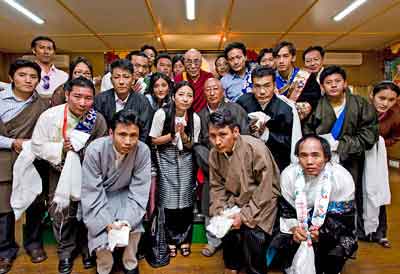
As avid mountaineers and outdoor photographers, Galen and Barbara Rowell helped bring Tibet and the Himalayas into the public eye. Their fund continues this legacy, providing small grants to Tibetan writers, academics, photographers, and conservationists. To learn more about Galen and Barbara Rowell and the background of the Rowell Fund, visit http://www.savetibet.org/support-tibet/donate-rowell-fund [1].
Some of this year's grant recipients are:*
1. Association of Tibetan Journalists (ATJ) in Dharamsala to publish a stylebook in Tibetan language, primarily on print and radio reporting. (Grant amount: $7243) www.tibetanjournalists.org [2]
2.Tibetan Oral History Project to record and translate the personal histories of Tibetan elders in Tibetan settlements in India. (Grant amount: $7500) www.tibetoralhistory.org [3]
3. Common Ground to undertake photography workshop project in Dharamsala to encourage Tibetan photographers. (Grant amount: $3725) www.commongroundsproject.org [4]
*Not all projects have been listed as some of the recipients have requested confidentiality.
ICT and the Rowell Fund for Tibet wish to congratulate this year's grant recipients. Past recipients have included Tibetans who have undertaken photography, film making and related projects that have enriched the Tibetan society. The Advisory Board of the Fund is made up of friends and family of Galen & Barbara and includes John Ackerly, Conrad Anker, David Breashears, Jimmy Chin, Bob and Beth Cushman, John Jancik , Bob Palais, Tony Rowell and Ray and Nicole Rowell Ryan. The Fund is managed by the International Campaign for Tibet.
For more information about Rowell Fund for Tibet see our website: www.savetibet.org/about-ict/rowell-fund-tibet [5]
Please visit http://www.savetibet.us [6] for the Tibetan version of the announcement.
By mriehl
8 December, 2011
Number of Visits: 5462



The latest
- Bakhtiari Narrator of Minab School
- 100 Questions / 40
- The Third Regiment: Memoirs of an Iraqi Prisoner of War-40
- Theory Four: The Crisis of Border Legitimacy
- A Look at the Book of the Restless Anonymous
- 100 Questions / 39
- A Classmates Narration of Martyr Zahra Haddad Adel
- The Third Regiment: Memoirs of an Iraqi Prisoner of War-39
Most visited
- 100 Questions / 38
- Examining the Differences in the Oral History Method of the Revolution and the War
- Explaining the “Use of Oral History in Writing Entries”
- A Classmates Narration of Martyr Zahra Haddad Adel
- The Third Regiment: Memoirs of an Iraqi Prisoner of War-39
- 100 Questions / 39
- A Look at the Book of the Restless Anonymous
- Theory Four: The Crisis of Border Legitimacy
100 Questions/ 34
To what extent are we allowed to use narrative techniques (however simple) in compiling an oral history text?We asked several researchers and activists in the field of oral history to express their views on oral history questions. The names of each participant are listed at the beginning of their answers, and the text of all answers will be published on this portal by the end of the week.
Validation: Challenges and Necessities
Where does truth stand in oral history? How can the correctness of a narrative be recognized? Does fact-checking matter? If there is exaggeration in the reporting of some accounts, how can it be detected? Is it possible to record an event accurately through the recording of a narrative? Readers and users of oral history works are often faced with these questions, and sometimes encounter doubts about some oral history works.From Revolutionary Circles to the Military Arm of the Islamic Government
In those days, it became clear that certain institutions had to be established very quickly—institutions suited to the temperament, expectations, and lingering aspirations of the younger generation; young people who had been politically active before the Revolution and, in some cases, had been directly entangled in arrests, imprisonment, ...Authenticating Oral History: From Possibility to Necessity
The use of oral history as one of the historical sources has long been one of the principal challenges facing oral historians and those who employ it in contemporary historiography. The development of international standards for oral history, as well as IRIB standards, was intended to address the criticisms raised in this regard. The relationship between Diplomatics in written records and oral history is reciprocal.
