
Stories of "Dogs"
Stories of "Dogs"
Interviews with members of the Revolutionary Workers Party &People's Revolutionary Army of Argentina (PRT-ERP)
Author: Pablo Alejandro Pozzi
Publisher: Imago Mundi
ISBN: 978-950-793-126-0
Edition: April 2012
Genre: Social Sciences, History
Pages: 416
Format: 22x15
Hard copy price: $ 136 | u $ s 32 | € 24
Stories of "Dogs", Interviews with members of the PRT-ERP, provide eight specially selected interviews collected from an even broader body of evidence. Two of them have been previously published which are difficult to obtain. All were selected because it conveyed the interviewees had great relevance beyond the issue of armed struggle and PRT-ERP. Each has its specificity and gives an idea of the complexity of this organization and, above all, the society that produced it. At the same time, the interviews reveal the limitations of guerrilla proposal. Also, what matters is not whether the evidence is "truth" or not, but rather what they suggest about the story of a guerrilla organization and what it requires time to rethink the history and society of those years Argentina. They are merely suggestive, and evoke traditions, continuities, ruptures, feelings, or stories, which the guerrillas was a national phenomenon, covering all sectors of society whose roots lie in the history of this society troubled Argentina and complex.
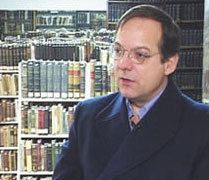 In the first chapter of the book, Pozzi writes:"I ended up writing a book on the PRTERP for almost twelve years. That book was, for me, important because it was a way to respond questions I had and pay some bills with my past. After writing the book I never thought back to the subject. It was not, nor is my intention, turn this into "me" issue. Moreover, I finished writing the book and I devoted myself to other projects. But somehow there are issues that even though they shy away always come back. In this case my intention is not to continue with the investigation, but simply collect some of the interviews for this first investigation, and allow them to "speak" for themselves. As appropriate, an interview is not a form of transmission of the respondent, but it is a construct between interviewer and interviewee. The latter respond within the limits imposed by the questions and "authority" of the researcher. Also, between the two is a relationship of tension, tug of war, where what is meant, what is said and what is meant and what is asked from it never is really not what happened or how he is remembered. Simply is a way of transmitting evoke and memories."
Pablo Alejandro Pozzi Has PhD in History (SUNY at Stony Brook, 1989) and is whole regular full professor in the Department of History Faculty of Arts, University of Buenos Aires (UBA, Argentina). His specialty is the contemporary social history and history of the working class after 1945. He has published numerous articles and books on history and American society and Argentina. He is director of the Oral History Program of the Institute of Library Research, UBA. He was also member of the International Committee of the Organization of American Historians and the Editorial Board of the Journal of American History. He is currently Contributing Editor of the Journal of American History and Latin American Perspectives, a member of the Advisory Board of the National Archives of Institutional Memory, Human Rights Secretariat of the Ministry of Justice and Human Rights Office. He was elected representative for Latin America at the International Council of the International Oral History Association and editor of Words and Silences the official publication of the IOHA, President (2010-2013) of the Oral History Association of Argentina (NOW), and Board member of the Latin American Oral History (RELAHO).
Number of Visits: 6771
Share


The latest
- 374th Night of Remembrance - 3
- 100 Questions/ 52
- The Third Regiment: Memoirs of an Iraqi Prisoner of War - 52
- A year of non-stop questioning
- Memories of Mrs. Jumay Ahmed Karoufi
- Encountering Oral History from a Theatrical Perspective
- 100 Questions/51
- The Third Regiment: Memoirs of an Iraqi Prisoner of War-51
Most visited
- The Third Regiment: Memoirs of an Iraqi Prisoner of War-51
- Encountering Oral History from a Theatrical Perspective
- 100 Questions/51
- A year of non-stop questioning
- Memories of Mrs. Jumay Ahmed Karoufi
- The Third Regiment: Memoirs of an Iraqi Prisoner of War - 52
- 100 Questions/ 52
- 374th Night of Remembrance - 3
100 Questions / 43
How can narrators and interviewers reach a common understanding?We asked several researchers and activists in the field of oral history to express their views on oral history questions. The names of each participant are listed at the beginning of their answers, and the text of all answers will be published on this portal by the end of the week.
Documentary Pathology of the US Embassy Documents
The Necessity of Scientific Rereading and Content Analysis of DocumentsMore than four decades have passed since the publication of the first collections of documents from the US Embassy in Tehran. However, despite the relatively easy access to this treasure trove of documents, systematic research exploitation of it has not been adequate. We still do not have a “comprehensive picture” of the content of these 11,000 documents.
100 Questions / 42
What is the importance of the narrator and interviewers shared understanding of the past in oral history?We asked several researchers and activists in the field of oral history to express their views on oral history questions. The names of each participant are listed at the beginning of their answers, and the text of all the answers will be published on this portal by the end of the week.
Validation: Challenges and Necessities
Where does truth stand in oral history? How can the correctness of a narrative be recognized? Does fact-checking matter? If there is exaggeration in the reporting of some accounts, how can it be detected? Is it possible to record an event accurately through the recording of a narrative? Readers and users of oral history works are often faced with these questions, and sometimes encounter doubts about some oral history works.
