
The Beating Pulse of a Nation at the Moment of Nowruz
Compiled by Faezeh Sassanikhah
Translated by Fazel Shirzad
2026-4-14
Every year, in the days and nights leading up to Nowruz, Shohada Square had a special charm. A few days before the New Year, the shops would fill with customers, and street vendors would take over the sidewalks. You could find everything in their stalls (from items for the Haft‑Sin table, candles, goldfish, and spring flowers to clothes, bags, and shoes).
But this year, because of the martyrdom of the Leader, the many compatriots we lost, and the wartime conditions, people didn’t welcome the New Year as they used to, and the square lacked its usual festive atmosphere. Instead, it carried the feeling of mourning and a strong, collective presence.
On the last day of Esfand (March), just a few hours before the new year, some people brought their Haft‑Sin tables (decorated with the national flag and photos of the martyred Leader and the new Leader) to the square so they could spend the moment of the year’s turning there. It was a scene Shohada Square had never witnessed before. They had come so the streets would belong to the patriots, not to those who betrayed the homeland. A few hours later, on the first night of the New Year, families, individuals, and groups gathered there again, just as they had the previous nights. And they kept coming (on cold nights, in mild weather, under light rain, and during the spring’s fierce thunderstorms).
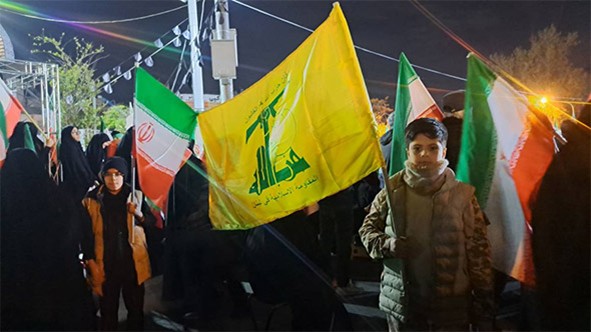
This steadfastness has taken such deep root in the streets that I know if, years from now, someone asks me:
“How is it possible that Nowruz arrived and Iranians didn’t think about buying new-year goods? How could it be that no one bought sabzeh or goldfish? How could people spend New Year’s Eve in the streets instead of visiting relatives? How could they avoid traveling just to make their presence in the capital more visible? How could they bring their Haft‑Sin tables into the streets?”
I will proudly say:
“Yes! We did all of that. In those days, our homes had grown as wide as our hearts. The size of every home had stretched to include all the streets and squares of the city. We gathered there; we chanted; we formed car convoys; we broke our fast together; we held up the Qur’an over our heads on Laylat al‑Qadr; and we welcomed the New Year.”
And I will add with excitement:
“Just a few hours before Nowruz, the weather was cloudy and rainy. People greeted the New Year under the rain and bid farewell to the month of Ramadan. And ten minutes before the New Year, Israel attacked the capital, hoping to ruin our most precious moments.”
And if they ask, “Weren’t you afraid?” I’ll say:
“To be honest, yes (but we didn’t leave). From the bottom of our hearts, we prayed for its destruction.”
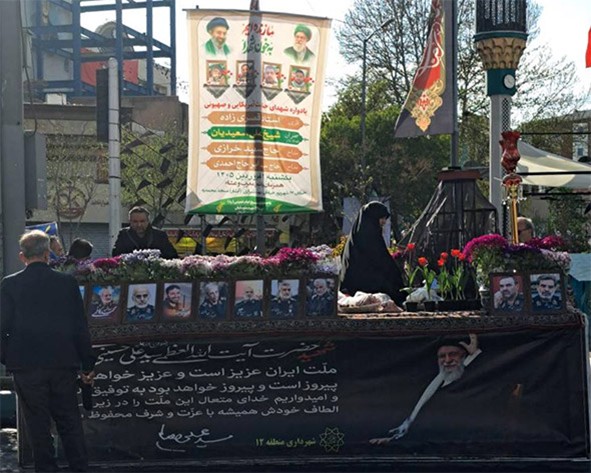
Now our ancient holiday has ended, and I already miss Nowruz 1405 and all those nights after the start of the Ramadan war. I miss the streets and squares that, every night of the holiday, filled with people who came together to protect their country and their system so that the military forces could focus solely on the foreign enemy.
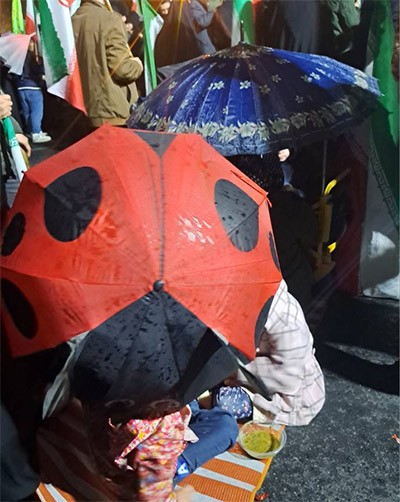
I miss the chance encounters with relatives, friends, and neighbors; the raised fists and cries of ‘Allahu Akbar’ when American warplanes appeared over the city; the balloon sellers; the children in the crowd; the volunteer stands at the edges of the square; the tea served at the end of the gatherings; the women who looked different from me; and the rainy nights when colorful umbrellas opened one by one.
My heart beats for the steady hearts of those days and nights—moments when, in the streets, miracles were born at every turn, carried by those whose presence filled every town and village with its unmistakable scent.
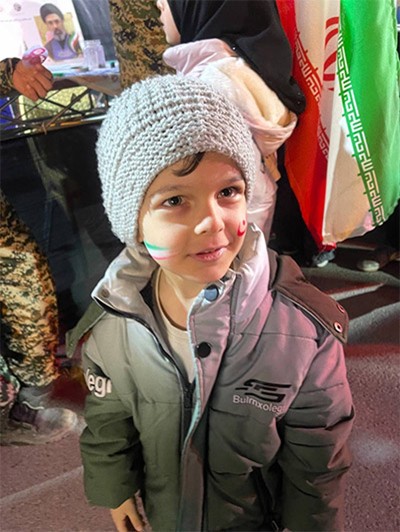
Watching this diversity of people standing together reminds me of the wistful stories elders tell of the unity of the 1980s. But I believe today’s epic is even greater. Back then, society was more uniform; but today, nearly five decades later, with all these differences in beliefs and with media working day and night to divide us, we still stand shoulder to shoulder.
These nights (especially the unique Nowruz nights) showed us that when the homeland is in danger, streets and squares are no longer mere places of passage; they become the beating pulse of a nation.
Number of Visits: 1094
Share


The latest
- Seventh Theory: The evolutionary duality of document and narrative
- Memories of Davoud Molaei
- Preparing a report for Khorasan Radio and Television
- 100 Questions/47
- The Third Regiment: Memoirs of an Iraqi Prisoner of War - 47
- Servants Narration of the Religious Rituals of the Holy Shrine of Imam Reza (AS) From Tradition to Lived Experience
- Memories of Nasrollah Fat’hian
- Memories of Hossein Ali Najafian
Most visited
- The Third Regiment: Memoirs of an Iraqi Prisoner of War - 46
- 100 Questions/46
- Servants Narration of the Religious Rituals of the Holy Shrine of Imam Reza (AS) From Tradition to Lived Experience
- Memories of Hossein Ali Najafian
- Memories of Nasrollah Fat’hian
- The Third Regiment: Memoirs of an Iraqi Prisoner of War - 47
- 100 Questions/47
- Preparing a report for Khorasan Radio and Television
100 Questions / 43
How can narrators and interviewers reach a common understanding?We asked several researchers and activists in the field of oral history to express their views on oral history questions. The names of each participant are listed at the beginning of their answers, and the text of all answers will be published on this portal by the end of the week.
Documentary Pathology of the US Embassy Documents
The Necessity of Scientific Rereading and Content Analysis of DocumentsMore than four decades have passed since the publication of the first collections of documents from the US Embassy in Tehran. However, despite the relatively easy access to this treasure trove of documents, systematic research exploitation of it has not been adequate. We still do not have a “comprehensive picture” of the content of these 11,000 documents.
100 Questions / 42
What is the importance of the narrator and interviewers shared understanding of the past in oral history?We asked several researchers and activists in the field of oral history to express their views on oral history questions. The names of each participant are listed at the beginning of their answers, and the text of all the answers will be published on this portal by the end of the week.
Validation: Challenges and Necessities
Where does truth stand in oral history? How can the correctness of a narrative be recognized? Does fact-checking matter? If there is exaggeration in the reporting of some accounts, how can it be detected? Is it possible to record an event accurately through the recording of a narrative? Readers and users of oral history works are often faced with these questions, and sometimes encounter doubts about some oral history works.
