
Report of the Fourth National Conference on the Oral History of the Sacred Defense -1
Acceptance of 220 Article Titles
Compiled by: Maryam Asadi Jafari
Translated by: Fazel Shirzad
2025-3-5
Note: According to the Iranian Oral History website, the “Conclusion of the Fourth National Conference on the Oral History of the Sacred Defense and Resistance” was held on Saturday morning, March 24, 2025, in the presence of oral history activists, in the Qalam Hall of the National Archives and Library Organization.
“Second Basij Brigadier General Abbas Bayrami,” head of the Sacred Defense Archives and Records Organization, after welcoming the guests and reading the message from Major General Mohammad Bagheri, Chief of the General Staff of the Armed Forces to this conference, emphasized the importance of increasing activities in the field of recording and collecting the oral history of warriors and their families.
Then, “Dr. Ali Asghar Jafari,” deputy coordinator of parliamentary and provincial affairs of the Foundation for the Preservation of Monuments and the Propagation of the Values of the Sacred Defense, stated: “We hope that we can add to the knowledge of this field and take a step forward from the articles presented at this conference. One of the missions of the Foundation for the Preservation of Monuments is to address oral history, manage, and direct this field, as well as to print and publish related works. The war is an important and key moment in our history, and after nearly 40 years, today we need to utilize the capacity of veterans to complete, clarify, and verify existing knowledge, as well as prevent its distortion. Today, when our veterans and commanders are present and alive, their memories must be compiled and made available so that history is not distorted in the future. Most commanders are alive. Their memories must be compiled and made available. So that it is not distorted in the future. Fortunately, good steps have been taken, but we are far behind in terms of setting goals. The oral history of a large number of our commanders has not yet been recorded and recorded, and we must definitely do this. At the same time, holding these national conferences helps to systematize, structure, and smooth this path, so that an agreed path is set forward. Many of these articles will help in these strategies. Fortunately, the quantitative and qualitative increase in articles and the reception of researchers has increased compared to previous periods, which is promising. Also, the selected articles will be published in the conference book so that they can be utilized and we can achieve a suitable model and pattern for recording, recording, and publishing oral history. At the Museum of the Revolution and Sacred Defense, we have recorded more than 6,000 hours of oral history interviews, some of which are no longer with us. If it had not been for this, we would have been deprived of a large part of the data on the Sacred Defense.”
“Dr. Gholamreza Amirkhani,” Head of the National Archives and Library Organization, continued the closing of the Fourth National Conference on the Oral History of the Sacred Defense and Resistance, saying: “Fortunately, the Sacred Defense and its history have not been contaminated with political aims and objectives, and it is an important point that anyone, from any perspective, has been able to express the memories of the Sacred Defense. Active centers have also addressed this issue impartially.
Oral history has been used as a fully accepted method for nearly 70 years after World War II. Of course, it has its advantages and disadvantages, but whatever it is, it increases the task of all those involved in this field. The National Archives and Library Organization has had a close relationship with the Foundation for the Preservation of Monuments for more than 13 years, and this partnership is a source of pride.”
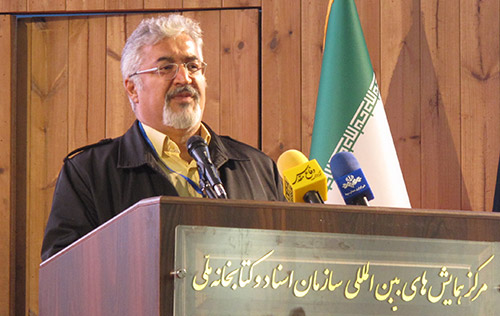
Dr. Gholamreza Azizi, the scientific secretary of the Fourth National Conference on the Oral History of Sacred Defense and Resistance, explained the scientific status of the conference and continued: "As Dr. Jafari pointed out, the Fourth Conference on the Oral History of Sacred Defense had several features. First, the number of articles received had increased compared to the previous period, from 170 to 220. We also witnessed better articles in terms of quality. The topic of resistance and history was also added to the conference's themes. For the first time, we addressed the pathology of the oral history of Sacred Defense in order to provide solutions to improve what has been done in these three decades, and the existing works will be criticized. With the hope that subsequent measures will be more appropriate, accurate, and scientific. From the time of the call to the closing ceremony, 4 preliminary sessions were held. 150 articles will be published in the conference book, and 16 of them will be introduced and honored. 12 articles were also presented to three specialized panels at FARAJA, the National Archives and Library Organization, and the Revolution and Sacred Defense Museum. This conference was held with the intention of providing at least research literature to those interested in the absence of an academic field of oral history in universities - although it is taught as a single course in some universities - and to benefit from them in order to increase knowledge.”
At the end of the “Conclusion of the Fourth National Conference on the Oral History of Sacred Defense and Resistance,” 90 oral history book titles were unveiled. Also, a number of narrators and activists in the field of oral history of the war, families of martyrs, and authors of outstanding articles were honored.
To be continued...
Number of Visits: 2371
Share


The latest
- The Third Regiment: Memoirs of an Iraqi Prisoner of War - 49
- Jasem Ghazbanpour's narration of the first day of the war in Khorramshahr
- Memoirs of Ali Fadaei
- The Relationship Between Oral History and Biography
- 100 Questions/48
- The Third Regiment: Memoirs of an Iraqi Prisoner of War - 48
- Seventh Theory: The evolutionary duality of document and narrative
- Memories of Davoud Molaei
Most visited
- Preparing a report for Khorasan Radio and Television
- The Third Regiment: Memoirs of an Iraqi Prisoner of War - 47
- 100 Questions/47
- The Third Regiment: Memoirs of an Iraqi Prisoner of War - 48
- Seventh Theory: The evolutionary duality of document and narrative
- Memories of Davoud Molaei
- 100 Questions/48
- The Relationship Between Oral History and Biography
100 Questions / 43
How can narrators and interviewers reach a common understanding?We asked several researchers and activists in the field of oral history to express their views on oral history questions. The names of each participant are listed at the beginning of their answers, and the text of all answers will be published on this portal by the end of the week.
Documentary Pathology of the US Embassy Documents
The Necessity of Scientific Rereading and Content Analysis of DocumentsMore than four decades have passed since the publication of the first collections of documents from the US Embassy in Tehran. However, despite the relatively easy access to this treasure trove of documents, systematic research exploitation of it has not been adequate. We still do not have a “comprehensive picture” of the content of these 11,000 documents.
100 Questions / 42
What is the importance of the narrator and interviewers shared understanding of the past in oral history?We asked several researchers and activists in the field of oral history to express their views on oral history questions. The names of each participant are listed at the beginning of their answers, and the text of all the answers will be published on this portal by the end of the week.
Validation: Challenges and Necessities
Where does truth stand in oral history? How can the correctness of a narrative be recognized? Does fact-checking matter? If there is exaggeration in the reporting of some accounts, how can it be detected? Is it possible to record an event accurately through the recording of a narrative? Readers and users of oral history works are often faced with these questions, and sometimes encounter doubts about some oral history works.
